Certification crucial to success of Merrithew’s first studio in China
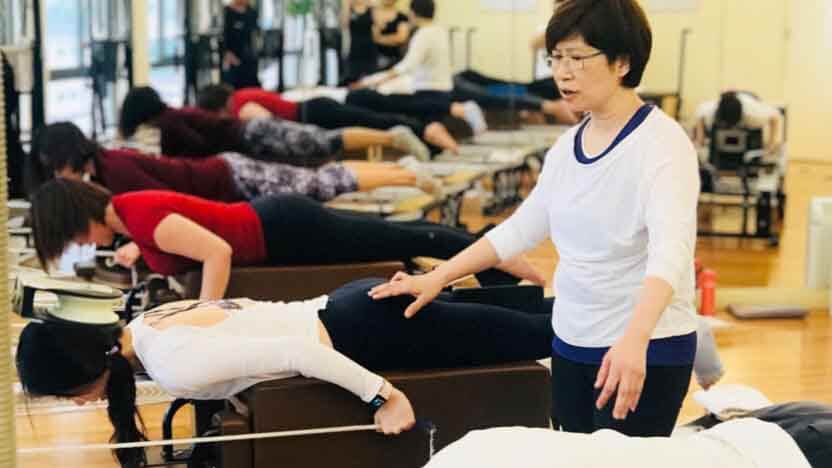
Eighteen years ago, Anita Tang didn’t know what Pilates was. She was working as a Country Manager in China for a multinational company. She spent eight months of the year on business trips, flying often to the Middle East and Africa. Back then, Anita was feeling overwhelmed with her body and life.

She was very close to her two young daughters and clearly remembers asking her father, who was already enjoying his life of retirement in Hong Kong, to come to Shanghai to take care them when both she and her husband had to travel for separate business trips. When Anita finally landed after three transits and more than 20 hours in the air, her luggage was lost. She felt despair, she said during a recent interview with Merrithew®.

The vast African prairie helped her feel better. Casting her eyes on the boundless grassland, and the wild animals running on it, she couldn’t but think how happy her two daughters, who loved small animals, would be if she had taken them on the trip. She asked herself, “Is what I am pursuing now really what I want?”

The answer was self-explanatory, and at that moment Anita was determined to find her true self and her life.

Founding The Orange Room

After that, Anita went to practice yoga to repair some injuries. She met Pat, who was taking the same class with her. Together, they opened The Orange Room in 2006. The decision was backed by a simple idea: To get fit and escape a demanding corporate job.

They soon found themselves surrounded by people who suffered from the same ailments they had because of the stress of life and work. The Orange Room quickly became a place for experience sharing: Which exercises work? Which exercises didn’t seem to work? Out of a myriad of exercises, they searched for the most effective ways of practicing.

Anita admits that in the early days, The Orange Room was not doing very well, but the core concept of sharing exercises that work was planted in the blood of the studio.

With this philosophy in mind, Anita’s encounter with Merrithew is only natural. When Anita and Pat were first introduced to STOTT PILATES®, they knew right away that it was what they had been searching for. They traveled to Toronto and Los Angeles respectively in the summer of 2011 to learn about Merrithew’s fitness modalities.

“When we discussed whether we wanted to work with Merrithew, we both said ‘Yes! This is the training we want!’”.

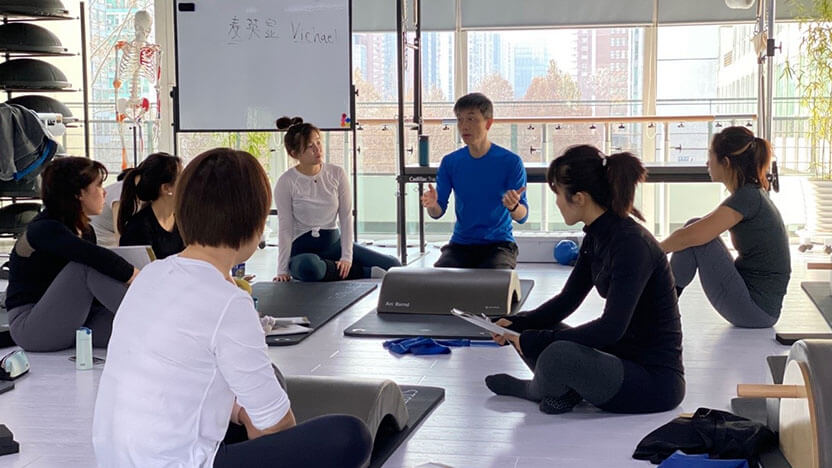
They soon brought STOTT PILATES to China, and in 2015 Anita became one of the first Merrithew Instructors Trainers in China’s mainland.

Pilates becoming more and more popular across China

Anita is now promoted to the rank of a Merrithew Lead Instructor Trainer. She also contributed to the translation of Merrithew teaching materials and is a valuable mentor to new instructors.

During the pandemic, foreign Instructor Trainers were not able to enter China to teach, which resulted in a serious shortage of ITs there. Anita, 60, often put aside the classes and work in The Orange Room to travel to other cities to support the local Merrithew Host Training Centers (HTCs), especially the newer ones. Many people were puzzled and asked why she would leave her own venue behind to help other HTCs.

“Because I started teaching earlier, so many owners or operators of those venues are actually my students,” Anita says.

In Anita’s eyes, it doesn’t take much of a reason for a teacher to help her students. Of course, her nearly two decades of experience in the mindful movement industry combined with her insight as a former senior executive of a multinational corporation also tells her that the Chinese market has great potential.

In fact, Anita believes it’s so big that there is not even a need for the various Merrithew HTCs to compete with each other. As a matter of fact, the training courses offered by Merrithew HTCs have always been open to the whole country, not limited to one city or one place. So, Anita believes that supporting the development of those HTCs with high potential will increase Merrithew’s visibility, share and voice in China’s mindful movement industry. Ultimately, this will benefit all training centers, including The Orange Room. That’s why she believes that by working together the mindful movement industry in China can grow bigger and stronger.

This grand vision and broad-mindedness are truly impressive. Maybe that’s why The Orange Room has such a good reputation in the industry. As the saying goes, the peach and the plum do not speak, yet a path is born beneath them. This is perhaps the most vivid description of the success story of The Orange Room.

Secrets of success: The Orange Room

At the end of the interview, I asked Anita if she had any advice for new Instructors or students who had just started or were going to start their career in the mindful movement industry.

She thought for a while and said, “As a coach or prospective coach, you should always keep reverence in heart. This is the most important point.”

In Anita’s view, it’s not just about respecting the teachers and cherishing the textbooks, but also about keeping reverence for the whole system they are learning – be it STOTT PILATES or the training systems of some other international brands. The students need to know that a knowledge system — developed by so many top professionals, scholars, and researchers of the industry, spanning over a decade or even decades — is bound to be profound and extensive and requires real patience and devotion from the students.

Pilates instructors have to learn anatomy and remember the knowledge of bones and muscles, because Pilates itself is derived from modern rehabilitation medicine. The learning process can be quite boring and academic, even tedious at times. But, with reverence in your heart, Anita believes that Instructors will have a proper expectation and know Pilates is not something that can be done overnight, but takes time to learn and build a solid foundation.

Anita also believes that the learning curve of Pilates is not linear, but a trajectory of exponential growth. The stronger the foundation, the faster the learning because despite all the variations in moves, the essentials are always the same.

The benefits of Merrithew certification

Anita shared with us an interesting story: A student asked her why they couldn’t get their STOTT PILATES Certification right after the courses, as this had been a standard practice of many other Pilates training brands.

Anita reflected that a Merrithew STOTT PILATES Intensive Mat-Plus or Intensive Reformer program has 40-50 class hours. When the students finish the course, they may feel they have learned everything, but when they get home and put the books aside, they may only remember 50% of the knowledge. Then, after a shower and dinner, they may only remember 30%. When they wake up the next morning, it would be quite impressive if they could still remember 20%. To forget things is natural for humans. “If you have only mastered 20% of the knowledge, how can we give you a certificate?”

This is why The Orange Room insists on hiring instructors who are STOTT PILATES Certified Instructors, and why Anita recommends that all her students must take the certification exam after completing the course.

She believes that taking this exam is like the last piece of the puzzle, the final touch of the entire learning process. Its greatest value is to help students digest and absorb what they have learned while it is still hot and lay a solid foundation for their future career.

While preparing for the exam through written revision and practical exercises, students can bring back the memory of 50-60% of the knowledge. This means that students who have passed the exam and become Merrithew Certified can master about 80% of the knowledge, Anita says.

For students who have spent more than 10,000 yuan (about $2,000-$3,000 CAD) on the training, they may only get less than 20% of the knowledge if they do not take the exam, and all they need is just to go one step further. After taking the exam, they can get four times the benefits plus an internationally recognized Certification. This is an easy choice for everyone to make, Anita says.

While some students seem to fear of Merrithew’s certification exams, she says, it’s not warranted. They either worry about their English proficiency or think that international certification must be difficult. But the truth is, Merrithew exams are also provided in Chinese, so language is not a problem at all.

As for the difficulty of the exam, Anita says that as the saying goes, nothing is difficult if you are fully prepared.

Another benefit of becoming a STOTT PILATES Certified Instructor is that, as its business grows in the Chinese market, Merrithew is offering more and more training courses in China.

To fill the widening gap of Chinese-speaking Instructor Trainers, Merrithew will actively invite top-rated Certified Instructors to apply for the Instructor Trainer course and become a proud Merrithew Instructor Trainer.

Anita hopes to see more and more excellent, diligent and promising students joining the ranks of Instructor Trainers through their hard work and rigorous learning.

Some people say that Anita’s teaching style is “as delicate as a good rain that dives into the night with the wind, and softly moistens everything”. This is also the feeling I got from this interview. Anita is fulfilling Merrithew’s mission of “help others to grow” with her kindness and responsibility. If I could use only one sentence to conclude, I would say it is truly our honor and the fortune of all the students to have a Lead Instructor Trainer like Anita in Merrithew.

Source: https://www.merrithew.com/blog/post/2022-08-15/certification-crucial-to-success-of-merrithews-first-studio-in-china

Share

Exercise of the Month: The fitness benefits of jumping

Considered by some to be the domain of professional athletes – basketball, tennis and football players, figure skaters, hockey players and dancers – jumping is a great way for anyone to improve agility, alignment, control and proper muscle activation.

Basketball great Kevin Durant and National Hockey League phenom Connor McDavid have certainly thought so and credit Merrithew equipment with helping them improve their athletic performances.

Our recent Merrithew Connect Collection, Pump it up: Pilates for basketball players highlights a series of movements that are ideal for fitness enthusiasts persuaded of the fitness benefits of jumping.

As with all workouts, a good warm-up is essential. Here, Merrithew® Master Instructor Trainer, PJ O’Clair demonstrates two approaches to improving spine flexibility with a Cat Stretch using the Halo Trainer Plus, in one instance, and the Cardio-Tramp® Rebounder in another.

The Cat Stretch is a great exercise to mobilize spine into both flexion and extension. Though it may appear quite simple, it requires an awareness of the neutral position between each. It’s important to keep the spine flexible in order to distribute forces efficiently and move the entire body in most effective way. This exercise also requires scapular mobility and control.

Moving on from the warm-up, this video showcases a great aerobic and strength-training workout; PJ guides clients through a series that includes 60-second intervals of bi-lateral jumps on the Cardio-Tramp, making sure that they are engaging the quadriceps both eccentrically and concentrically and using the resilient surface of the accessory board to create better articulation through the feet in order to absorb forces properly.

In the second video, Merrithew co-founder and Executive Director of Education, Moira Merrithew, begins by instructing a student’s use of the Reformer Jumpboard to simulate the ground in order to focus on the correct biomechanics of the lower kinetic chain.

A stable torso and correct alignment of the associated joints allows the hip joint to assume an anatomically neutral position as energy is transmitted through the soles of the feet, up through the body. The focus on ground-reaction forces also ensures ideal activation of not only the muscles that produce the jumping action, but those that control the position and movement of the torso as well.

“Use the Jumpboard as you would the floor, so you’re stable,” she says.

Moira also highlights the importance of foot mobility to overall fitness, including jumping: “We tend to neglect the balls of the feet and the metatarsal joints (specifically the metatarsophalangeal joints), but it’s important to keep them mobile.”

Technically, the foot moves as three separate functional units that include the hindfoot, the midfoot and the forefoot. It is important to monitor and adjust the mobility of all the areas of the foot in a variety of planes to ensure its role as a complex spring mechanism.

Using the Jumpboard, Moira notes the importance of proper alignment through hip, knee and ankle joints to engage the muscles effectively and avoid any injury, concepts reinforced through the STOTT PILATES® Principles. If there is a weak link in the chain, an injury is possible at any point along it, or even somewhere else in the body as compensatory patterns are established.

In a third video, Moira relies on use of the Reformer again to highlight how to stabilize the hips, knees and ankles. The workout in this particular video is intense enough that it can be used as a complete workout on its own, or as a warm up-before other athletic activities or fitness training.

Toward its final quarter, Moira guides the client through a series of movements that focus on strengthening the hip extensors. This group that includes gluteus maximus, and hamstrings is essential to maintaining optimal alignment in the pelvis and hips, as well as generating the power necessary for explosive movements like taking a jump shot.

We hope this collection of videos will inspire you to incorporate jumping into upcoming workouts. Jumping is a sophisticated and complex movement that has the potential to have a great impact on overall fitness.


Source: https://www.merrithew.com/blog/post/2022-07-27/exercise-of-the-month-the-fitness-benefits-of-jumping

Share

Why this Pilates instructor spent more than 100 days in quarantine over the past two years

No one has ever questioned Vichael Mak’s commitment to Pilates. And that was before he spent more than 100 days in quarantine over the past 20 months while teaching 45 courses (as well as leading various workshops and overseeing exams) in a dozen different cities across China — all to ensure eager students received a Merrithew® education.

“During the COVID-19 outbreak, no Instructor Trainers from overseas can be admitted into Mainland China,” the Hong Kong-based Lead Instructor Trainer explains. “That means there aren’t enough ITs to serve an enormous market for Pilates education. As one of the few who can teach in China during this time — and the only one for some courses and workshops — I feel that I have a calling to do it.”

This is a responsibility Mak has placed upon himself, but it’s not a burden. He expresses pride in becoming the first Merrithew Instructor Trainer in the Greater China region (covering Mainland China, Hong Kong, Macau and Taiwan), and connects it with a sense of duty. While random accommodations, limited food options and periods of intense isolation would drive most of us toward hyperbolic complaints, Mak not only takes it all in stride, but he embraces the quarantines (two two-week stints and four for three weeks) as an opportunity.

Vichael Mak works one-on-one with a student who is stretching out one of his legs

Speaking from his most recent isolated waiting period, he says, “It’s like a retreat. I’m not a social animal, so I’m fine to be alone. Thanks to technology, I can also keep myself pretty busy. I signed up for some online courses and workshops, registered for webinars, read e-books and watched movies. I brought a mat and some small props for exercises and to keep my regular workout schedule. Between that and taking care of our studio business, I also lead online classes with my clients.” It sounds as though Mak accomplishes more in quarantine than many of us do in our normal day-to-day lives. But adapting to situations is nothing new to him.

Everyone who partners with Merrithew has a story that is unique, and Mak is no exception. “Unlike most of the ITs I don’t come from a background like dance, gymnastics or physical therapy,” he explains. The co-founder of VIM Pilates Studio in Hong Kong, Mak was a decade into a corporate career before he turned his love of Pilates into a business in 2006. This only acted as a catalyst to get him more involved with Pilates. “As the co-founder of a hosting center, I met a lot of students,” Mak says. “That’s what inspired me to go down an education path with Merrithew. Thus, I became an IT in 2010, and, now, a Lead IT.”

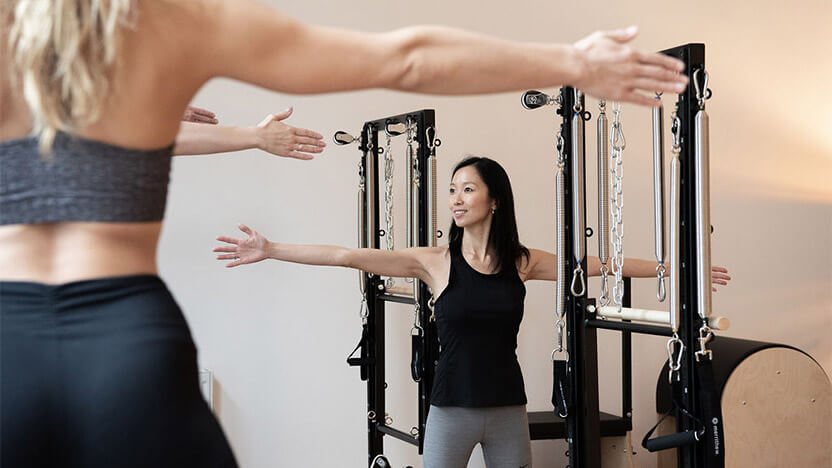
Vichael Mak’s arms are outstretched as he stands in front of several students who follow his movements

While backgrounds might vary and everyone has their own singular experience with Pilates, it seems there is something of a shared through line among Merrithew partners and instructors: It’s an ongoing journey that prompts a continued commitment. We see this again and again. Being able to see the progress of those you’re helping not only makes a career in Pilates rewarding, it leaves you with a sense of fulfilment. You witness the improvements of clients and students, and that only makes you want to help them more.

Mak says he derives a sense of meaning and also measures his success in the improvement of those he instructs. So, when the need for ITs in China increased, he stepped up again and again and again, travelling to either Shenzen or Shanghai a half-dozen times to quarantine before beginning courses that would keep him from home for at least three months.

Vichael Mak stands in front of several students laying on their mats and lifting one leg in the air

What keeps him coming back? “Meeting so many committed and diligent students has been wonderful, and developing more ITs gives me a sense of accomplishment, but most rewarding of all is witnessing my students become excellent ITs,” he says.

Mak is so positive about the entire experience, it’s only when he’s pressed that he comes up with a drawback, and even then, instead of complaints he reveals a further devotion to his work: “I miss my clients and students in Hong Kong and other countries,” he admits. “I look forward to when the pandemic ends and borders can reopen. When more local ITs are available and more foreign ITs can come, I can spend some more time with my clients in Hong Kong and also meet students in different countries.”

But that won’t mean the end of teaching in China. “Of course, I will still teach in Mainland China,” he says. As if there was ever any doubt.


Source: https://www.merrithew.com/blog/post/2022-04-11/why-this-pilates-instructor-spent-more-than-100-days-in-quarantine-over-the-past-two-years

Share

Ask the Expert: Instructing clients after a long break

“The days are longer, the nights are shorter, the sun is shining, it’s noticeably warmer, Summer, every single moment is worth its weight in gold, Summer is like the world’s best story that’s waiting to be told.”

These are the immortal words of Phineas and Ferb, beloved stepbrothers in the popular eponymous kids’ cartoon.

They somehow ring true to those living in the Northern Hemisphere. Many of us are returning to activity from a winter of hibernation. It’s time to dust off the sneakers, pull out the shorts and get back to moving and playing.

We know that fitness and performance levels were likely higher before the winter brought us indoors, but can we really expect to return to the same form after what may be months of inactivity.

The same can be true for someone returning after a long break due to injury or illness. Before getting completely up to speed, there are some things to keep in mind to avoid overtraining and injury.

As trainers, it is up to us to monitor our clients, outlining a program that will get them back to moving slowly, ensuring a safe and measured increase in performance level. Here are some things to keep in mind when seeing clients again after a long break:

Know Your Baseline

You may have a good idea of where your client was before a pause in his or her Pilates exercise. You may have even kept a detailed file with program data. However, your client’s fitness level may have decreased, maybe even substantially, so it is necessary to gather your baseline data again.

This may include static and dynamic postural assessments or movement screens that measure current mobility and stability capabilities. Use whatever tools you would normally employ with a new client. Then you’ll know your exact starting point and be able to effectively plot an updated Pilates workout. Remember to make your client aware of where they are currently, and help them understand that it isn’t unusual for levels to drop during times of inactivity.

Slow and Steady

It’s natural to want to improve your fitness level as quickly as possible, but starting slowly is key. It will take the neuromyofascial system some time to come back online. Start with some basic moves to strengthen the core and periphery, explore range of motion and balance, and don’t forget to focus on breathing.

In some cases, it may be more effective to have more frequent shorter Pilates workouts that fewer longer ones, for example, 30 minutes four times a week may be better than one two-hour workout. Setting periodic goals will help your client see their progress, and remember to re-assess and re-test frequently to help keep them motivated.

Prepare for the Activity

It is important to make sure the training routine matches the sport or activity of choice. For example, if your client intends to play tennis, a session exploring the benefits of mat Pilates focused mainly in the sagittal plane (forward and back), may not be ideal.

You would need to include some upright tasks that contain rotational and frontal plane (side-to-side) movements. A well-rounded program will consider the physical requirements of the activity, and ensure adequate strength and mobility is targeted.

Too Much of a Good Thing

Many of our clients are excited to be active again and want to go all out right at the beginning. Be aware that doing too much too soon is a recipe for injury. One of the greatest assets in ensuring a safe return to activity, is increasing mindfulness.

Being aware of how the body is feeling at all times will help prevent overdoing it. Beginning an exercise session with a few minutes of quiet breath work can help bring focus to how the body is feeling. Also, paying attention to the warning signs, twinges, joint grinding and popping, and stopping as soon as discomfort occurs, will help keep the body on the road to a strong summer of physical enjoyment.

Leave it to the Pro

Clients who return to a trainer after a long break are looking for guidance. As a movement professional, it is your job to give them the best program possible, while keeping in mind any limitations. Once you’ve established current levels and set reasonable goals, keeping your client motivated may pose its own challenges.

They may be discouraged by the decrease in their fitness level, or the time it will take to get them back to where they were before the break. Remind them that returning to previous levels of strength and mobility will take considerably less time than it did to achieve them in the first place. Careful guidance and a measured, knowledgeable approach will help them trust and follow your direction.

No matter the reason for the break, returning to movement will challenge both the client and the Instructor. But by working together as a team, setting and achieving goals along the way, you will be able to take part in whatever activity makes you smile.


Source: https://www.merrithew.com/blog/post/2022-04-27/ask-the-expert-instructing-clients-after-a-long-break

Share

Is it worth buying reconditioned treadmill equipment?

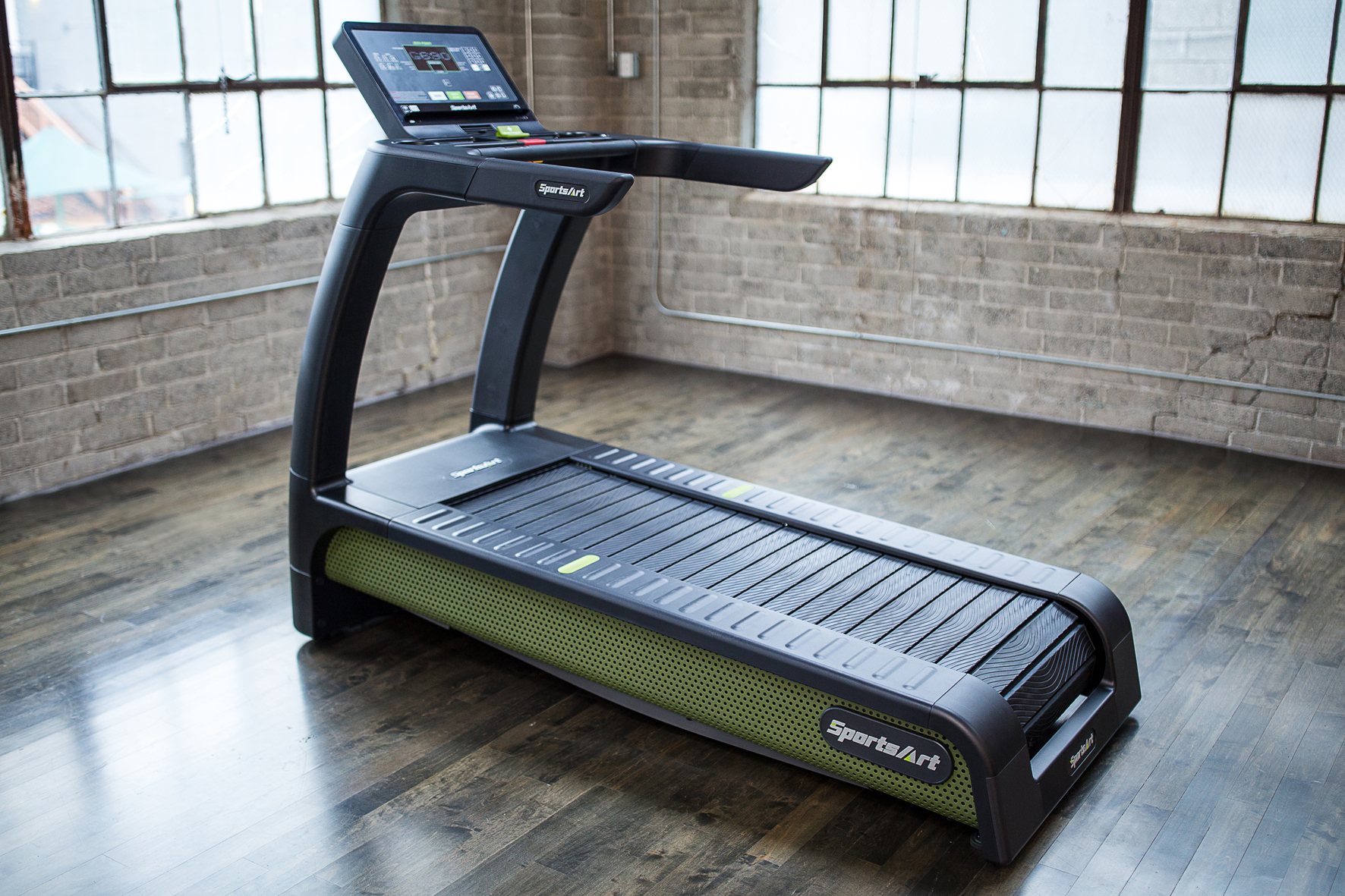
Buying reconditioned fitness equipment may be a good investment for both your health and wallet if you know what to look for before purchasing. Think you are in the market for a treadmill, why not purchase reconditioned treadmill equipment?

Are you wondering if used treadmills are really good, or are they dirty and unsafe?

Generally, reconditioned treadmills are not dirty or unhygienic. They were just ‘used’ previously by someone who had the same desire that you have now – fitness and health.

Is reconditioned treadmill equipment a good investment?

The magic of a treadmill as a simple piece of exercise equipment is that it is not age-bound. Anyone can use a treadmill. From teenagers to adults to healthy octogenarians, treadmills are a great form of indoor exercise.

You can use a treadmill for running, walking, and also jogging. Regardless of whether they are new or used, the benefits are still the same.

What should you look for in a used treadmill?

Once you have made your decision to purchase a reconditioned treadmill, there are things you need to look for in the item. They are:

  • A good brand name – look for a reputable name, check reviews, and if still in doubt, ask your health club what brand is good.
  • A newer model – you want a reconditioned treadmill that is less than five years old. However, treadmills that are over six years old could still be in better condition.
  • A service record – it is important that you know what problems the treadmill has had previously.
  • A warranty – when you are buying from a store, ask if there is a warranty through the store. If the seller is a private party, look for a transferable warranty.

Try before you buy

You have to avoid buying a reconditioned treadmill just because it’s a good deal. Or else, it may end up in your garage for the rest of your life. Just take a test run. Wear your running shoes or your gym shoes when you check out a used treadmill. Run or jog for about 20 to 30 minutes. This way you know whether the equipment is really good or not.

The next thing is to listen to if the treadmill runs too loudly or shakes. Check if the belt is frayed. Inspect the item for any kind of damage, cracks, excessive wear, rust, and other defects. If you notice any of these, then look for another. Buying a damaged treadmill is neither good for your health nor your pocket.

You have to thoroughly test out the treadmill before purchasing it to ensure that everything works properly.

Price of a reconditioned treadmill in Singapore

When you are shopping for a used treadmill you have to remember that the price depends on two things. The first thing is the features. The second is the quality of the product.

The range of prices can start from around $100 and go up to around $5000 in Singapore.

Mostly gently used, high-quality reconditioned treadmills often are found for less than $400 – saving you more than a thousand dollars.

In the end, a reconditioned treadmill is just as good as a new one. The best advice we could give you on this item is to do good research, avoid impulsive purchases, and question the seller.

Share

How to make your gym business succeed?

There is a dramatic shifting landscape in the fitness industry. Working out at a gym is no longer about a long, silent, sweaty session for hard muscles and good health. Customers are transforming, and so are their requirements and aspirations. As with all types of business ventures, operating a successful gym business needs good knowledge about the industry and careful planning. All factors – small and big, will play a crucial role in the success of your gym business. Let’s look at some of the essential factors that will contribute to a successful gym business.

Use the best fitness equipment

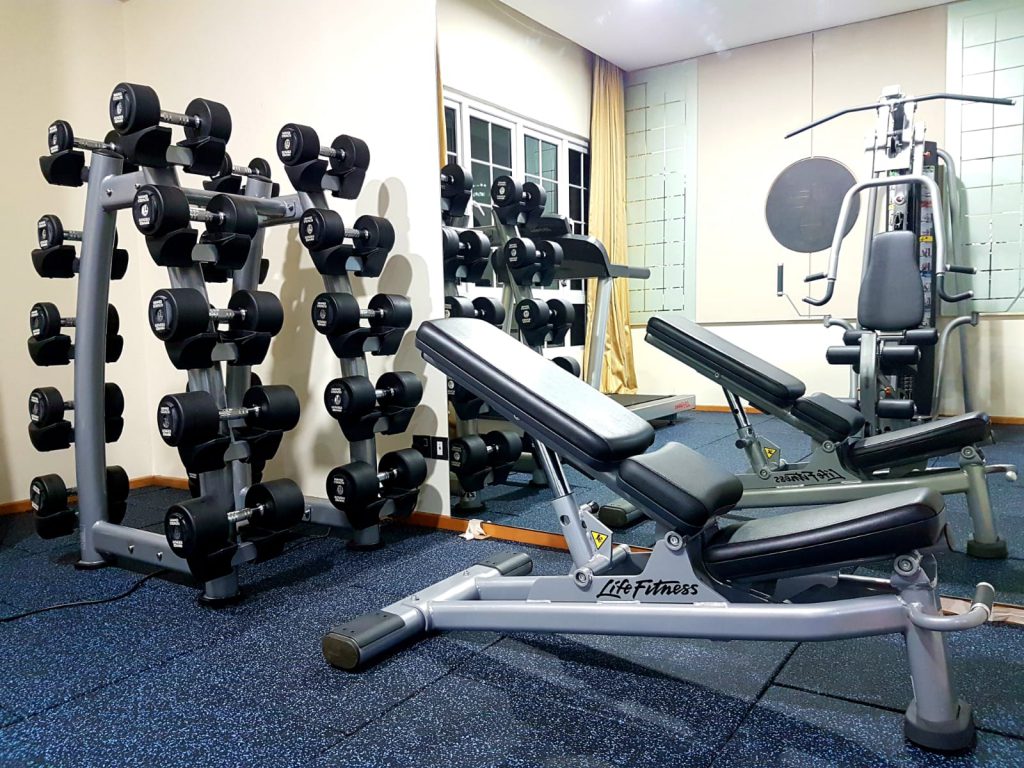
You need to have some good commercial fitness equipment to make your gym shine in front and succeed as a business. There is no requirement for fancy and expensive fitness equipment if you don’t have space. But, to make your gym business successful, you have to provide your members with different types of quality equipment that they can use. The equipment should be safe and error-free.

Know your customers’ needs

When you are running a fitness center, you have to focus on the needs of your customers. As a business owner, consider what is good for your gym members and offer the best. You have to ensure your members do not feel pressured and they exercise at their own pace while enjoying each round of exercise. Engaging with members is a great way to build a strong community. You can use the following ways to increase membership engagement:

  • User-friendly online presence (social media)
  • Developing group exercise programs
  • Creating onboarding programs for new members

Offering free good health programs

While providing the best commercial fitness equipment, you will also have to ensure that your gym provides good health programs as well. This is quite important and should also be included in your activity list. Offering free programs is a marketing strategy, however, think of it as a service and offer the best you’ve got. You can conduct classes and follow up for all your members about a good diet plan and everything about good health.

Advertise your own product or service

You should not simply market your gym with its fitness equipment only but also aim to sell a product or a service. Many gyms sell their own health products, meal plans, and workout equipment. This can be a great method to make sure that your gym business not just operates as a monotonous workout space, but gets plenty of real business and succeed in the industry. You can advertise your products via digital and print media.

Increase gym membership and profit

If you want to make your gym business unbeaten, you have to know the right way of marketing. That is to focus on increasing memberships and profits. If you want to make your gym more profitable, then you need to increase the number of members in your gym and then everything comes into place. This is the ultimate tip to make your gym business successful.

Share

Merrithew Reformers receive special certification from EU

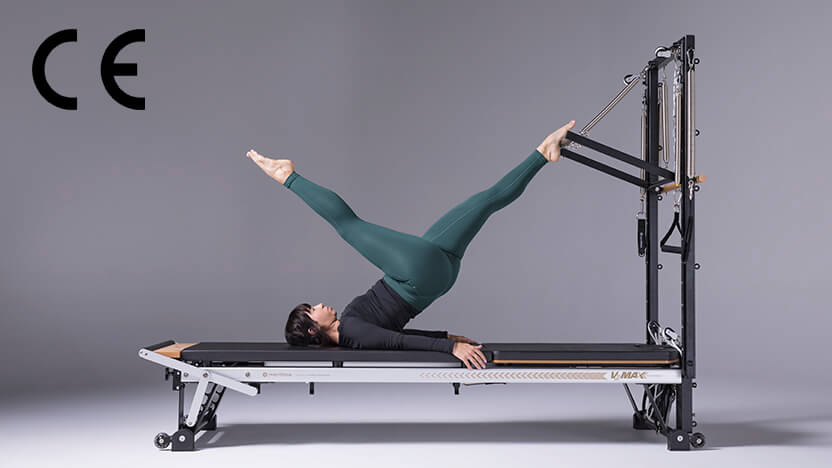
Last month, Merrithew received a special certification from the European Union to officially recognize three of the company’s Reformers as medical equipment.

The company’s SPX® Max PlusV2 Max Plus and Rehab V2 Max Plus Reformers have all acquired a CE Marking, verifying the equipment’s status as a Class I Medical Device across most of the EU. This means all three pieces of equipment can be formally used in hospitals and health care settings by medical professionals.

When those in the fitness community speak of their progress (or that of their clients), it’s not uncommon to hear them refer to it as a journey. It makes sense: When someone effectively commits to exercise and improving their mind-body connection, it usually represents a change of direction, and it inevitably involves setting a goal, or having a destination in mind.

For Pilates, this journey often begins at a low point. In speaking with studio owners and instructors around the world for Merrithew’s recurring Studio Spotlight features, there is a commonality to their otherwise unique journeys: Many are introduced to Pilates as a means of recuperating from an injury.

An image of Merrithew’s Rehab V2 Max Plus

It’s a testament to the practice of mind-body exercise that this is such a widely shared origin story in the industry. It means it’s not just hyperbole to say that Pilates is life-altering.

But while the rehabilitative properties of Pilates have been known for decades by those in the community, it’s only recently that it’s been recognized by government regulators and health authorities as a means to improving the quality of life for those suffering from physical ailments.

Official recognition is vital to ensuring Pilates, in general, and Merrithew equipment, specifically, can be used by doctors, sports medicine professionals, physiotherapists, physical therapists, chiropractors and osteopaths to treat their patients.

An image of Merrithew’s SPX Max Plus

That’s why news that Merrithew’s SPX Max Plus, V2 Max Plus and Rehab V2 Max Plus Reformers have been approved under the European Medical Devices Regulation MDR 2017/745 is so important to the company.

Not only does it mean more people will be able to improve their health with the equipment Merrithew designs and manufactures, the certification also acts of evidence of the equipment’s quality, reliability and safety.

Acquiring CE Marking also represents Merrithew’s ongoing investment in the European market. In addition to growing a community of education partners and STOTT PILATES® Certified Instructors across the continent, Merrithew recently opened its European distribution center to offer direct access to its equipment.

As a result of this initiative, consumers in the region receive faster shipping on new equipment and better pricing with no importation tax.

An image of Merrithew’s V2 Max Plus

Just as we might use the term “journey” to describe the distance between where we’ve come and where we are regarding fitness or Pilates, we can also use it to describe Merrithew’s progress as a company. The CE Marking is the most recent step forward on a path that began more than 30 years ago, when co-founders Lindsay and Moira Merrithew opened a small Pilates studio in Toronto, Canada.

Not only will Merrithew equipment and programming continue to help people of all fitness levels, just as Lindsay and Moira intended back then, it’s going to be used to help start many more journeys too, thanks to this most recent development.

Source: https://www.merrithew.com/blog/post/2022-04-08/merrithew-reformers-receive-special-certification-from-eu?utm_source=Mailchimp&utm_campaign=d088ee23db-NL_202204&utm_medium=email&utm_term=0_0cd2a6749f-d088ee23db-182743006&ct=t(NL_202204)&goal=0_0cd2a6749f-d088ee23db-182743006&mc_cid=d088ee23db&mc_eid=0c09e032cf

Share

Breathing Techniques: How to Develop More Efficient Breathing Patterns

Breath has always been the first principle taught to students and clients learning and practicing the STOTT PILATES® Movement System.

Efficient breathing, or lack thereof, can have a profound impact on the performance of an individual exercise and on the activities of daily life.

Understanding the power of the breath can help you get into the right frame of mind for whatever activity you’re doing. You can develop the efficiency, power and mental fortitude to be successful. But it’s also important to understand that the optimal way to breathe may depend on the desired outcome.

As we continue to explore the STOTT PILATES Principle of breathing in the third installment in this series, we must first discuss the three-dimensional nature of breath. As we’ve mentioned before, the motions of the rib cage during respiration can be described as a ‘pump handle,’ ‘bucket handle’ and ‘caliper.’

Understanding rib cage biomechanics in three-dimensional breathing

Pump handle: This action relates to vertical breathing, where the expansion is mostly in the upper part of the lungs, causing the rib cage to lift superiorly both in the front and the back, then release down again.

When vertical breathing occurs, the accessory muscles of the upper neck and shoulders, particularly the sternocleidomastoid and scalenes, are used. The breath rate is usually faster and shallower, so the gas exchange is much less effective.

Bucket handle: With this emphasis, the rib cage expands laterally and elevates slightly, then reverses direction.

Caliper: This motion is reserved for the lowest two or floating ribs. Their motion is almost completely in a sideways direction. The last two can be collectively called lateral breathing. This type of breath allows the oxygen to travel deeper into the lungs and create a more efficient gas exchange.

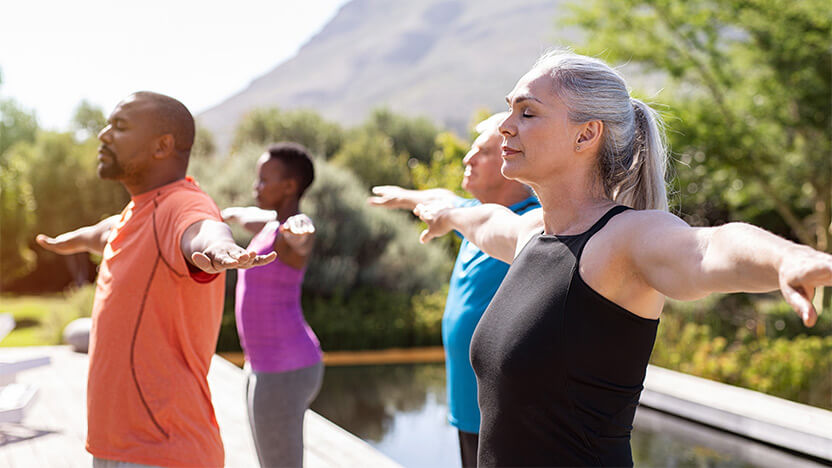
A group of exercise participants practice mindful breathing outside

The diaphragm’s role in efficient breathing

In every type of inhalation, the diaphragm plays a crucial role. As the diaphragm contracts and depresses, negative pressure is developed in the thoracic cavity, and air is drawn in.

When the diaphragm relaxes, it ascends into the thoracic cavity and the air is pressed out. As the diaphragm lowers, the abdominal viscera are compressed, causing the abdomen to expand slightly.

In order to be efficient with the breath, there must be space for that expansion. If the abdominal muscles are held in a contracted position, the diaphragm will not be able to descend as far, and may cause only vertical breath to occur. This does not mean that the abdominal muscles are allowed to completely relax, but there must be some expansion available.

Feeling the abdominal expansion with a deep breath is a great way to notice the decent of the diaphragm into the abdominal cavity.

Practicing a more efficient breath pattern will help strengthen the diaphragm. This in turn will help the other deep stabilizing muscles, namely the pelvic floor, transversus abdominis and multifidus, to perform optimally.

Just like you would strengthen your leg muscles to be able to jump higher, it is important to strengthen the diaphragm and ensure it is working in synchronicity with these muscles to become more effective and efficient. It can also help control posture in order to avoid injuries and prevent back pain.

Three tips for developing more efficient breathing habits

  • Create sensory awareness of your natural breath pattern while performing your regular daily tasks
  • Learn and educate yourself on efficient ways to breathe; we’ve got more resources here and here
  • Practice efficient breath patterns; your Pilates class is a great place to start

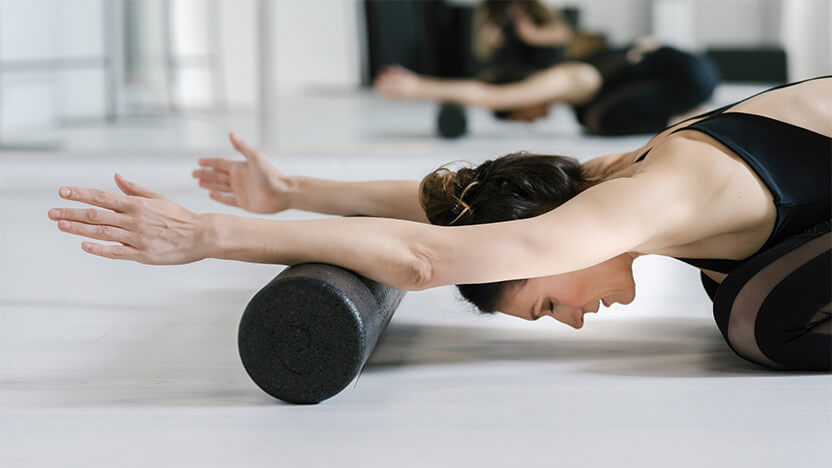
A woman relaxes and breathes on her Foam Roller in a Pilates class

Try nasal breathing: This inhale through the nose, exhale through the nose breathing pattern can be used as a technique to make the diaphragm work harder to draw the air into the thoracic cavity.

This allows you to control the volume and speed of the breath, so more oxygen is drawn into the lungs on the inhale, and the optimal amount of CO2 is released during the exhale. If not enough C02 is released, the body becomes over-oxygenated, which causes the breath to become shallower. This is where the benefits of controlled breathing become more apparent.

Effective breathing techniques for Pilates

Employing effective breathing techniques for Pilates exercises can improve overall performance and decrease negative tension.

When introducing a new breath pattern, choose the breathing technique that is most effective for the client and the task at hand.

If nasal breathing doesn’t work, then use the more traditional inhale through the nose and exhale through the mouth pattern.

Breathing should not be part of choreography. The importance of breathing well is more in understanding the breath, so we can give clients the ammunition to breathe more effectively in any situation.

The breath pattern should create greater efficiency and not be something that makes the client confused or the movement more complicated. As mentioned in our last post, it is often most effective to teach the movement pattern first, then layer on the breath, choosing whatever breathing technique works best for the client.

The art and science of breathing is ever-evolving, and as more research is done, our application of breathing techniques will also change.

Exploring different breathing techniques and styles is exciting and provides Pilates, fitness and mind-body instructors with more tools to ensure their clients are getting the most out of every exercise.


Source: https://www.merrithew.com/blog/post/2021-08-05/breathing-techniques-how-to-develop-more-efficient-breathing-patterns

Share

How this Pilates instructor built a successful studio in Europe’s largest fitness market

When Johanna Hwang speaks of her business — The Pilates Place Berlin — she says all the right things. While it’s not uncommon in the age of fast fitness trends trends to see more emphasis placed on words than action, what distinguishes Hwang from so many others is that the ambition and common sense she espouses is more than mere platitudes.

She doesn’t just say all the right things. She does all the right things, too.

To understand this, one needs to look no further than her beautiful studio in Berlin. Fully outfitted with Merrithew equipment, The Pilates Place is a spacious statement in tasteful design. But it’s more than its mere appearance that attracts the eye of potential clients.

“Merrithew, to me, is like the Rolls-Royce of Pilates brands,” explains Hwang. “The equipment is stylish, yes, but it’s also practical, multi-functional, comfortable and high quality.” The matching of form and function is a recurring theme in Hwang’s business, and it begins with her decision to use Merrithew products to attract and retain clients. She says, “Some clients, who have trained in studios with other equipment, told me just lying on a Merrithew Reformer feels more comfortable. It gives a different dynamic during the exercises. I believe it’s one of the reasons why they keep coming to my studio.”

Certainly, there’s a large element of calculation involved in running a successful Pilates business in Germany, Europe’s largest fitness market, but there’s no shortage of intuition either. Two years ago, when Hwang’s partner told her about an empty space in Mitte, Berlin’s central borough, she immediately called the real estate broker. “At the first viewing I knew,” she remembers. “This was the right place for the boutique Pilates studio I had dreamed of: high ceiling, amazing lighting, in a new residential area, nearby offices and public transportation.”

Three Merrithew Reformers are being used for different exercises in a well-lit studio

The decision to locate in her dream space wasn’t without hazards, however. “The risk of another lockdown due to COVID-19 was there, but I didn’t want to lose the chance of getting this beautiful studio, so I signed the contract and started building. Unfortunately, the pandemic got worse, and we were forced into a second lockdown just as the studio was ready to open in November of 2020.” It was only after a seven month wait that Pilates and fitness studios were allowed to open again in the area.

In the beginning, Hwang relied on fliers to attract clients, but as time as gone on she’s focused her outreach efforts through social media and relying on word of mouth. “I am very active on Instagram and Facebook, offering discounts to new clients and for special occasions,” she explains. “More recently, I’ve seen clients recommending the studio to friends and families.”

It’s not difficult to understand why clients would be eager to spread the word. Hwang again points to Merrithew equipment as a deciding-factor: “Not many other studios can offer a Cadillac Trapeze Table or Ladder Barrel, for example.” But Hwang’s connection with Merrithew doesn’t end there. Not only is she trained and certified in STOTT PILATES®, but so are several of members of her team of instructors, as well. This expertise has worked best with small group classes, which are among the most popular offerings at The Pilates Place Berlin.

Johanna Hwang guides a student as they stretch at The Pilates Place Berlin

Hwang’s use of Merrithew equipment and programming is more than just another example of how she’s matched form and function to appeal to clients. It also represents a constant through her Pilates journey.

Hwang tells the story of her introduction to Pilates like it happened yesterday: “I was a ballerina at Staatsballett Berlin. While visiting my sister in the U.S., I found a Pilates studio around the corner — an actual STOTT PILATES studio. After the very first session, I felt such an amazing effect on my body and booked my sessions throughout the whole month I was staying there. I remember falling in love with the Reformer, but also enjoying the mat classes on the stability ball.”

This initial experience changed Hwang’s life. “After having experienced the benefits of the Pilates workout, I decided to start the STOTT PILATES instructor training while I was still dancing. It took me a couple of years to complete the entire instructor training in Milan and Hamburg, and get the certification for all equipment in all levels.”

She put her certification to good use. After ending her dancing career, Hwang began working in several Pilates studios across Berlin. She explains that even during this experience, “I always had the dream of owning my own business, because following the visions of others was not enough for me.”

Merrithew mats, Reformers and accessories are laid out in a beautiful open space at The Pilates Place Berlin

Now, several years later, with a studio full of Merrithew equipment and STOTT PILATES certified instructors, Hwang is finding success in making her vision a reality. While she takes pride in the individual relationships she’s developed with each client — “We have built up a deep trust. We always exchange information, not only about mindful movement, but also other things in life.” — and playing a pivotal role in their journey — “I enjoy seeing them improve so quickly. Their success is my success.” — Hwang possesses a passion and ambition for more.

“Over the coming years, I want to see Pilates grow in Germany,” she says. “I want the opportunity to use my passion to make everyone feel the amazing and extraordinary benefits of the Pilates method. I believe Pilates is great for everybody. I just have to find a way to get that message out there.”

Given her story so far — a testament to practicing what you preach — one would only be foolish to bet against her.

Source: https://www.merrithew.com/blog/post/2022-03-24/how-this-pilates-instructor-built-a-successful-studio-in-europe-s-largest-fitness-market

Share

Ask The Expert: Is Matwork Just for Beginners?

It’s easy to think of Pilates Matwork as merely the starting point of a program. After all, there’s no fancy equipment, no springs, no straps. However, exercises performed on the mat allow you to focus on areas that are often overlooked: quality of movement, optimal sequencing and activating the whole body.

For Merrithew instructors, the STOTT PILATES® Certification path does encourage starting with the Matwork repertoire so that a deeper understanding of the material is developed. This may lead to the misconception that a client would start with Matwork, then progress to the equipment exercises.

However, this is not necessarily the case. There are a couple of things to consider when looking at Matwork and how it is used for clients of all levels and ability.

1. Gravity as Resistance

The main source of resistance in all Matwork exercises done without props is gravity. Learning how to work with gravity to produce the desired muscular activation is one of the main goals of a trained instructor.

Since gravitational force is always in one direction – down – changing the starting position of an exercise will alter the target muscles. Using only bodyweight requires greater focus and helps build muscle strength and endurance, and makes the tendency to “cheat” a little easier to avoid. Bodyweight training has long been regarded as a highly effective means of increasing fitness levels in any individual.

2. Progressive Exercise

It is true that many workout warm-ups are done on the mat, but the intensity and challenge of the workout can be as individual as the person performing it. At any level, movement quality is paramount. Not only are the specific exercises being performed important, but how they are performed may be even more crucial. Because of this, exercises that seem simple can become extremely challenging when done properly.

The STOTT PILATES repertoire begins at the Essential Level, where simple movement patterns are introduced. Once competency is developed, progressions through the Intermediate and Advanced levels are layered. While this may be the goal of a particular exerciser, it is not a quick journey, sometimes taking years of dedicated practice to achieve.

Often, the same exercise will have versions at the Essential, Intermediate and Advanced levels, each building in intensity and physical demands. For example, the Teaser, a classic Pilates exercise, begins with a preparation at the Essential level that focuses on developing abdominal strength, movement sequencing and spinal mobility. This is done first in a closed-chain (in this case, with the feet on the mat), then in open-chain (the feet are lifted to a tabletop position) environment.

At the Intermediate level, the movement is done at a slightly quicker pace with the addition of a longer lever to challenge muscular endurance in the hip flexors (the legs are extended out on a diagonal).

Finally, the Advanced version has the movement starting from a lengthened supine position on the mat where the strength of the anterior muscles (on the front of the body) are challenged even further. Subsequent Advanced variations challenge torso stability in an inclined position while adding long-lever eccentric control, balance and coordination.

3. Elements of the Essences

Each exercise in the full Mat repertoire has a particular focus, or Essence, that may include strength, stability, mobility, balance, coordination, muscular endurance and flexibility — individually or in combination. Starting with the Essential exercises, each area is developed and movement competency must be achieved in the majority of these areas before additional challenges are programmed.

Most people will be more proficient in one area over another. For example, one may possess a good deal of strength, but be lacking in flexibility or balance. The goal of a well-designed Matwork program is to create a good balance in all facets.

Movement patterns are also performed in a variety of directions or planes that include forward, back, sideways and rotational sequences. Once again, a client may be very strong in one direction, may be lacking in another. For example, a runner or cyclist who performs a repetitive sagittal plane activity (forward/back motion), may be lacking in frontal plane (side to side) ability. It is important for the instructor to be able to recognize where deficiencies are, and choose exercises appropriately.

4. Giving Props

The exercises in the Matwork repertoire also support the use of props to target elements needing more focus. Resistance props like the Flex-Band and Fitness Circle require greater muscular strength and can be used to incorporate full-body movements. This could mean adding arm work to an exercise that is traditionally core-focused.

They can also give the added bonus of working the legs when the simple movement might not include them. A Mini Stability Ball or Stability Barrel require greater balance and control when used in specific applications. Additionally, Soft Handweights, Resistance Tubing, Stability Balls, Sliding Mobility Disks and even a Twist Ball have the ability increase the intensity in any workout, providing greater demands for the entire neuromuscular and myofascial systems.

With all this in mind, it is easy to see how Matwork alone can be perfect for those starting out, but can also challenge even the most fit individuals.

Source: https://www.merrithew.com/blog/post/2022-03-15/ask-the-expert-is-matwork-just-for-beginners

Share