9 Tips for Building a Better Home Gym

After years of helping customers across the US design their dream setups, Eleiko’s Kat Widup shares her best advice for creating a space that’s safe, functional, and enjoyable to train in — whether it’s a garage, basement, or spare room.


1. Start from the ground up

Flooring is the foundation. Most people begin with tiles or a lifting platform and build from there. Choose modular tiles that protect the floor, reduce noise, and can be reused if you move.

2. Choose a versatile centerpiece

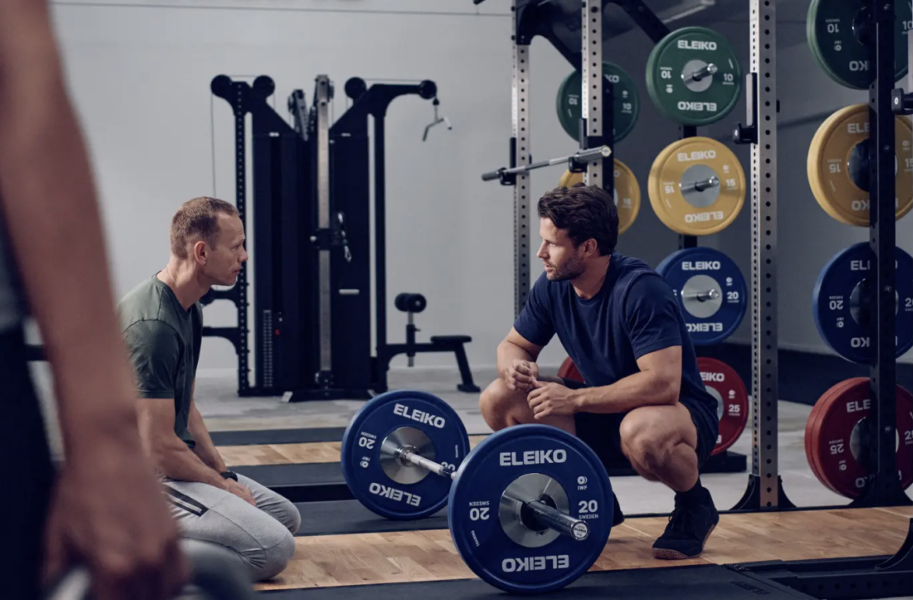
A Prestera Half Rack is the most popular choice. It’s compact but offers everything you need — squats, presses, pulls, and storage options. Add attachments that match your training goals and build around that.

3. Keep your space clear

More equipment doesn’t mean better training. A well-designed home gym is about how it works, not how much it holds. Use wall-mounted storage and utility boards to keep gear off the floor and maintain a clean, motivating space.


4. Skip the trends

Smart or connected machines may look impressive but often end up unused. Trends come and go — free weights have always worked. Timeless, durable gear gives better results and lasts a lifetime.

5. Go for a half rack

The half rack is one of the most underrated pieces of equipment. Many think a full power rack is a must, but a half rack offers everything you need in less space — efficient, safe, and clean.

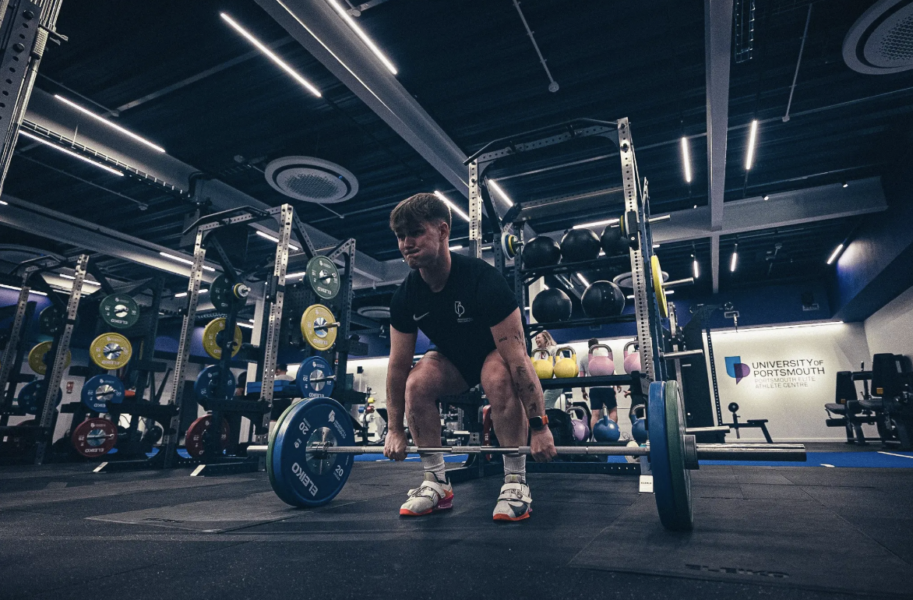
6. Plan around the barbell

The barbell requires the most room and freedom of movement. Start your layout with the barbell — make sure it can move freely and safely — then build everything else around it.


7. Think modular and movable

People move more often these days. Choose equipment and flooring that can move with you. Eleiko’s modular tiles and Prestera system make it easy to reconfigure or relocate your gym.

8. Get expert help early

A free design consultation can save time and help you visualize your setup before you buy. Discuss your training style, review 2D and 3D renderings, and receive a clear quote and installation plan — with no cost or commitment.

9. Don’t overthink installation

Roughly half of Eleiko’s home gym customers install everything themselves with basic tools. For larger projects, professional installers are available. Either way, you’re never left alone with just a manual.

Final thought

No matter the size or budget, it’s possible to create a home gym that’s safe, functional, and inspiring — a space you’ll actually want to train in.


Source: https://eleiko.com/en/stories/9-tips-for-building-a-better-home-gym

Share

How Does The Power Plate Work? What Are The Benefits For Older Adults?

How does the Power Plate work? And why is it such a breakthrough for older adults?

Most people think of exercise as “moving your body to move your muscles.” But Power Plate flips that idea upside down.

Power Plate moves you — thousands of times per minute.

It sends gentle, precise vibrations through your body — 30 to 40 times per second — creating tiny, reflexive muscle contractions. You don’t even have to think about it. Your body automatically responds, firing up muscles all the way from your feet to your face.

That means even if you’re stiff, sore, out of shape, or recovering from something… your muscles can still work — without strain, without pain, and without forcing your joints.

This is the secret reason Power Plate feels so good: it stimulates every system in your body at once.

  • Circulatory system: It drives blood flow and oxygen throughout your body — the same way walking or light cardio would, but faster and more efficiently.

  • Lymphatic system: It flushes out waste and fluid buildup, helping reduce swelling and inflammation.

  • Muscular system: It activates deep, stabilizing muscles that you normally can’t reach — the ones that keep you upright, balanced, and strong.

  • Nervous system: It calms the fight-or-flight response, lowers tension, and triggers a relaxation effect that helps you feel lighter and more grounded.

For older adults, these effects add up to something extraordinary.

It’s like discovering an exercise you can actually do — and one that your body actually loves.

Here’s what happens when you use Power Plate consistently:

  • You move better. Stiffness eases. Your joints feel more fluid.

  • You get stronger — not by lifting more, but by activating muscles more completely.

  • You burn more fat — because your body starts using energy more efficiently.

  • You recover faster from activity or injury.

  • You sleep better, think clearer, and feel more energized.

And maybe the most overlooked benefit: it helps reverse anabolic resistance — that frustrating slowdown in muscle growth and repair that happens as we age. Power Plate helps the body respond to exercise again — like it did years ago.

In short, Power Plate is not just another piece of fitness equipment.
It’s a circulation engine, a balance trainer, and a longevity tool — all in one.

It’s how older adults can rebuild the foundation of youth: movement that doesn’t hurt, energy that lasts, and strength that comes back faster than you thought possible.

What is the best plate for older adults/your parents?   the my5 has a center column that you can hold onto for balance.  The my8 is our top of the line home unit.  The personal is our entry level unit that can be easily moved around at 35 pounds.

How To Get Started On The Power Plate:  (EASY)

The beautiful thing about Power Plate is that you don’t need to “work out” to get results. You just need to start moving on it — a little bit every day.

Think of it like this: you’re teaching your body how to wake up again. The goal isn’t intensity. It’s consistency.

Here’s how to make it effortless:

Step 1: Start small.
Just stand or sit on the Power Plate for 1–2 minutes at a time. That’s it. Feel the vibration travel up through your legs. You’ll notice your muscles start to subtly contract — without you doing anything.

You can do this morning, afternoon, or evening. Once or twice a day is perfect at the start.

Step 2: Loosen and wake up your body.
Gently bend your knees, roll your shoulders, or move your arms while standing on the Plate. Think “mini stretches.” This helps your body re-learn smooth, balanced movement — and it starts to improve blood flow and flexibility almost instantly.

Step 3: Focus on how it feels — not how it looks.
The Plate works by stimulating your nervous system and muscle fibers at lightning speed. So even if you feel like you’re not “doing” much, your body is doing a lot. You’ll feel looser, lighter, and more stable after just a few short sessions.

Step 4: Gradually increase your time.
After the first week, move up to 5 minutes per session. Try gentle squats, calf raises, or seated leg lifts. The key is to keep it comfortable — you should feel energized, not exhausted.

Step 5: Use it for recovery, too.
Power Plate isn’t just for “exercise.” Try sitting with your feet on the Plate before bed, or after a walk or round of golf. It helps clear stiffness, calm your nervous system, and prepare your body for deep sleep.

The key takeaway:
Power Plate isn’t about pushing harder. It’s about activating smarter.

Even two minutes a day starts a chain reaction: better circulation, more mobility, less stiffness, and more energy. Once your body starts to feel it, you won’t want to skip a day — it becomes your secret reset button.

If you can stand, you can start. And once you start, your body will remember how good it’s supposed to feel.

Source: https://powerplate.com/blogs/news/how-does-the-power-plate-work-what-are-the-benefits-for-older-adults

Share

Recovery and Wellness: Ariel Lim’s Journey with STOTT PILATES®

Ariel Lim — Merrithew® Instructor Trainer and the owner of Merrithew Host Training Center WITH PILATES® — faced a Lumbar 4-5-disc issue during her teenage years and later acquired a T1-L1 disc problem due to an accident. These personal challenges, along with a challenging period in Ariel’s life, led her to discover the remarkable benefits of STOTT PILATES®.

Ariel firmly believes that the foundational principles of STOTT PILATES played a pivotal role in not only aiding her recovery but also effectively managing her spinal health to this day.

In Ariel’s role as a Merrithew® Instructor Trainer she had the privilege of working with several clients who also contend with various health issues, such as lumbar disc problems, degenerated knees, and mild frozen shoulders.


In this blog, we asked Ariel to share her story, what led her to discover STOTT PILATES, and her experience of working with clients dealing with pain.

Helping clients with pain management

“Keeping a tab on my client’s condition is a non-negotiable. I like to ask client’s condition before the session. It is crucial for me to know how they were feeling after the last session, as well as their current situation,” Ariel says.

It’s noteworthy that each of Ariel’s clients received a formal diagnosis from a medical professional and completed their initial treatments at the hospital. Following their doctors’ recommendations, they turned to Pilates, and Ariel has been guiding them on this transformative journey. Some clients have been under Ariel’s tutelage for over a decade, while others have embarked on their Pilates practice just a few months ago.

Ariel’s recovery experience

Ariel began STOTT PILATES with a focus on 3D breathing and gentle movements, starting with small hip joint movements while lying down in various positions. “I also incorporated arm movements. Initially, I couldn’t perform any exercise which involves flexion, extension or rotation of the spine.

“After a few months of consistent effort, I was able to do exercises that requires to lift one leg into a tabletop position. I vividly remember the joy I felt during those milestones.

“Although I’ve had my own experience with a disc issue, I recognize that each person’s experience is unique. Therefore, I always inquire about how my clients are feeling on a given day and actively listen to their responses,” Ariel says.


STOTT PILATES and its healing power

“The STOTT PILATES Principles played a pivotal role in my recovery and continue to help me manage my spinal health to this day,” Ariel says.

  1. Muscle activation: “STOTT PILATES places a significant emphasis on strengthening the core muscles, including the deep stabilizing muscles of the spine. This core strength helps support and stabilize the spine, which is crucial for individuals recovering from or managing spinal issues,” Ariel says.
    Ariel believes that building a strong core helped alleviate some of her discomfort and provided better overall spinal support.
  2. Alignment and posture: “The method focuses on proper alignment and posture, which can be especially important for individuals with spinal problems. Correct alignment can relieve stress on the spine and promote better overall spinal health,” Ariel says.
  3. Controlled movements: “STOTT PILATES emphasizes controlled and precise movements. This controlled approach allowed me someone —who may have experienced pain or discomfort from sudden, jerky movements— to exercise in a way that minimizes the risk of exacerbating my condition. The controlled movements can also improve coordination and body awareness,” Ariel says.
  4. Adaptability: “STOTT PILATES can be adapted to suit various fitness levels and health conditions. This adaptability is essential when working with clients who have health issues such as lumbar disc problems, degenerated knees, or frozen shoulders,” Ariel says.
    Ariel appreciates the versatility of the method in tailoring workouts to meet the specific needs and limitations of her clients.
    For Ariel, this holistic approach has been beneficial during challenging periods in her life, as it can promote relaxation, stress relief, and an overall sense of well-being.


Source: https://www.merrithew.com/blog/post/2023-10-03/recovery-and-wellness-ariel-lims-journey-with-stott-pilates

Share

Best Time for Training

Most of us have a time that we prefer to train. For some it’s in the morning, others in the afternoon, and still others prefer the evening. But is there a difference?

It has been well established that maximal voluntary contraction, or maximum isometric strength, peaks in the evening between 16:00-20:00 (4:00-8:00 pm). Exercise performance for a variety of tasks have also been shown to be better in the evening. Even so, is this improvement in performance and strength in the evening period set in stone, or can training change this?

Researchers conducting the highest level of research have shown a few interesting points on this matter. They include:

  1. Baseline strength levels (assessed by maximal isometric strength) are higher in the late afternoon-evening than in the morning
  2. Strength training in the morning can increase your baseline strength in the morning to similar strength levels as found in the late afternoon-evening
  3. Strength training in the evening improves evening baseline strength, but does not improve the morning baseline strength, so a noticeable difference still exists between morning and evening strength levels
  4. Strength gains are similar whether you train in the morning or evening
  5. Changes in muscle size are similar for both morning or evening training – though the research on this is fairly sparse

General take aways:

  • If you are training for health, wellness, and/or general performance, train at a time that you prefer
  • If you are training for specific event or competition, it may be advantageous to at least have some training session around the same time as your event or competition

Source: https://eleiko.com/en/stories/best-time-for-training

Share

What Happens To Your Body When You Step On A Power Plate?

What Happens To Your Body When You Step On A Power Plate?

When you stand on a Power Plate for about 9 minutes, you start to experience pain relief in the knees, hips, and lower back. And elsewhere.

Tip: Start at the lowest setting to get acclimated– and then work to higher speeds and higher amplitudes.  Lower speeds help your body recover, higher speeds help your body regenerate.

Here is how this process works– and how it sets off a “whole body regenerative cascade.”


1. Muscle Reflex Activation Every muscle in your legs and core contracts and relaxes 30–50 times per second.

→ This constant micro-activation creates a neuromuscular feedback loop that wakes up dormant stabilizer muscles around the knees, hips, and spine — helping restore balance and joint alignment.

Side benefit: Your nervous system gets a “software reboot,” improving coordination and reaction time.


2. Increased Blood Flow  The vibration acts like a pump — pushing blood deep into muscles, connective tissue, and joints.

→ This delivers oxygen and nutrients while flushing out metabolic waste and inflammatory byproducts that cause stiffness and pain.

Side benefit: You feel a warm, tingling “circulatory rush” that boosts energy and speeds recovery.


3. Lymphatic Drainage Unlike the circulatory system, the lymph system has no pump. The Power Plate becomes one.

→ Lymph fluid moves up to 50× faster than during walking, clearing toxins, swelling, and inflammation that often collect in knees, hips, and the lower back.

Side benefit: You may notice clearer sinuses, lighter legs, and even a flatter stomach as fluids drain.


4. Joint Decompression Micro-movements in three planes — up/down, side/side, and front/back — cause subtle traction at each joint.

→ This helps release pressure in the spine, lubricate the joints, and re-hydrate the discs — similar to gentle traction therapy.

Side benefit: Heightened flexibility and a greater feeling of “space” in your body.


5. Release of Nitric Oxide Whole-body vibration triggers endothelial cells to produce nitric oxide, a vasodilator.

→ This widens blood vessels, lowers local inflammation, and helps your tissues absorb more oxygen.

Side benefit: Better circulation to skin, muscles, and even the brain — leading to a light, calm, and clear feeling afterward.


6. Growth Hormone & Stem Cell Activation Mechanical stimulation signals bone marrow, muscle tissue and even tendons to release different kinds of stem cells, repair cells and growth hormone.

→ These repair cells circulate to damaged areas (like cartilage and connective tissue), accelerating the healing process.

Side benefit: Over time, collagen production improves — strengthening tendons, fascia, and even skin tone.


7. Pain Gating Effect The vibration “drowns out” pain signals traveling to the brain (similar to TENS therapy).

→ As the brain perceives the strong vibration input, pain messages are temporarily blocked, and muscles around painful areas relax.

Side benefit: A powerful relaxation response — often described as “my body feels switched on, but my pain switched off.”


8. Neurological Recalibration Your proprioceptors — sensors that tell your brain where your body is in space — get recalibrated.

→ This helps retrain movement patterns that may have caused knee, hip, or back pain in the first place.

Side benefit: Improved posture and balance, reducing the risk of future injury.


9. Fascial Release The gentle multidirectional vibration loosens fascial adhesions (knots in connective tissue).

→ As fascia softens, muscles can glide freely again, restoring mobility and range of motion.

Side benefit: You often feel “taller” and lighter after a session — like a deep tissue massage without the pain.


When you stand or move on a Power Plate, you’re sending thousands of gentle vibrations through your body every second.

These vibrations aren’t random — they create micro-movements in your muscles, bones, and connective tissue that your body reads as a powerful “wake-up call.”

This mechanical stimulation turns on repair systems that tend to slow down as we age.


Inside your muscles are special cells called satellite cells. They’re like tiny mechanics sitting dormant until something signals that repair is needed.

Power Plate vibration activates them, helping your muscles recover from soreness, build strength, and even regain tone that’s been lost over time.

The same thing happens deep inside your bones: the vibrations reach your bone marrow, where another type of repair cell lives — mesenchymal stem cells.

These are your body’s master builders, capable of turning into bone, cartilage, or connective tissue. The Power Plate gently nudges them awake, encouraging your body to refresh and strengthen itself naturally.


All of this is happening while your circulation surges. The rhythmic motion acts almost like a second heartbeat, pushing blood and lymph fluid through the body more efficiently.

That means more oxygen, nutrients, and hormones are delivered to tissues that need healing — and waste products are cleared out faster.

As this mechanical activity ramps up, the body releases important signaling molecules. Nitric oxide is one of the first — it relaxes blood vessels and improves oxygen flow everywhere, from your brain to your skin.


Soon after, levels of growth hormone rise, helping build new muscle, strengthen collagen, and restore tissue structure.

Your muscles also release special messenger proteins called myokines, which tell your immune system to reduce inflammation and help coordinate repair across the body.

The result of all this — more active stem cells, better circulation, higher nitric oxide, and natural growth hormone — is what we call a whole-body regenerative cascade. It’s a self-reinforcing cycle where the body senses movement, sends out repair signals, activates its own stem cells, delivers nutrients, and builds itself stronger with every session.


Most people feel it quickly — muscles loosen, joints move more freely, and energy returns.


But beneath the surface, your cells are working together to renew your tissues, improve circulation, and restore the biological rhythm of recovery. In short, Power Plate helps your body remember how to heal itself — something it’s always known how to do.


Source: https://powerplate.com/blogs/news/what-happens-to-your-body-when-you-step-on-a-power-plate

Share

From Dead Zones to Destination Spaces – How Gyms Are Reinventing the Member Experience Through Experiential Design

The traditional gym model is being reimagined. No longer just rows of cardio machines and weight racks, today’s fitness spaces are evolving into lifestyle hubs, completely redefining how your members interact, recover, and engage with wellness. A key part of this transformation is how gyms are activating formerly underutilized “dead zones” and turning them into vibrant, high-value experiences that extend far beyond the workout.

This isn’t just a design trend; it’s a new fitness ethos. By integrating social media rooms, recovery lounges, biophilic design, and curated community zones, innovative gyms create immersive environments where fitness, social connection, and brand loyalty converge.

1. From Utility to Experience: The Shift in Member Expectations

Modern gym‑goers aren’t just looking for equipment; they’re looking for meaning, atmosphere, and alignment with their lifestyle values now more than ever before. Dead zones (those awkward, unused corners or corridors) have become fertile ground for brand storytelling and community‑building. The experiential fitness revolution is rooted in a simple idea: if every square foot tells a story, members stay longer, engage deeper, and keep coming back. In fact, members who feel part of a connected community are three times more likely to stick around long‑term according to industry data.

2. The Social Media Room: Fitness as a Shareable Experience

For Gen Z and Millennials, if it’s not on the feed, did it even happen? Around 80% of Gen Z and Millennials share their workout routines or achievements on social platforms like Instagram and TikTok, making social presence central to fitness experiences. Forward-thinking gyms are capitalizing on this by creating dedicated spaces designed for social sharing — well-lit corners with dynamic backdrops, branded hashtags, ring lights, and even influencer partnerships. These aren’t just photo ops; they’re micro-marketing engines. Every selfie or video shot in these rooms becomes user-generated content — authentic, free promotion that extends your brand reach exponentially.

These zones also serve a dual purpose. A growing number of exercisers are pushing back against the influencer culture, voicing frustration about unintentionally appearing in the background of workout content. By offering a designated space for filming, Social Media Rooms help protect the privacy of everyday members while still supporting content creators and increasing brand recognition online.


3. Recovery Rooms: Elevating Wellness Beyond the Workout

As the conversation around fitness broadens to include recovery, mental health, and longevity, gyms are investing in recovery zones that feel more like upscale lounges than locker rooms. Think infrared saunas, cryo chambers, ice baths and guided breathwork pods. These spaces flip a post-workout cooldown into a value-added service that speaks to the wellness-savvy exerciser. In short, recovery rooms are the new retention tools.

4. Biophilic Design and Living Walls: A Breath of Fresh Air

Integrating nature into gym design is both aesthetic and psychological. Living walls and natural materials soften the intensity of fitness environments, helping members feel grounded and mentally recharged. It’s part of a broader movement toward “green fitness,” which ties into sustainability narratives, air quality improvements, and overall member well-being. These elements not only differentiate a gym visually but communicate care and attention to member experience on a deeper level.


5. Community Corners: Turning Spaces Into Belonging

It’s not the square footage — it’s what you do with it. Cozy nooks with comfortable seating, communal tables, or coworking pods give members a reason to linger, connect, and build relationships. Whether it’s for casual chats post-class, member-hosted events, or brand pop-ups, these “third spaces” (not home, not work) reinforce loyalty and position the gym as a lifestyle partner, not just a place to sweat. In fact, gyms where the social environment and community feel are strong see up to 70% of members citing this as a key reason they stay.


Your Takeaway:

Gyms that win in the next decade won’t just be the ones with the newest machines; they’ll be the ones that design with purpose. By activating overlooked zones and turning them into shareable, livable, recoverable, and sensory-driven experiences, they’re not just increasing dwell time, but building community. In the experience economy, this kind of spatial storytelling isn’t a luxury, but a strategic imperative.

That’s where we come in. Our team of experts is ready to help you bring that vision to life by designing a facility floor that not only meets the demands of today’s members but also sets the tone for the future of fitness. Let’s build it together. Contact us today to get started.

Source: https://www.lifefitness.com/en-us/customer-support/education-hub/blog/gyms-reinventing-member-experience

Share

The Power of Strength Training for a Longer, Healthier Life

Aging is a natural process, but our lifestyle choices greatly influence how we age.

While aerobic exercise has long been linked with longevity, growing research emphasizes the importance of strength training in maintaining vitality, independence, and overall well⎯being.

Strength training goes beyond just building muscle—it helps preserve metabolic health, supports cognitive function, and enhances bone strength, all of which contribute to a longer, healthier life.

In this article, we’ll explore the science⎯backed benefits of strength training for longevity, share practical ways to incorporate it into your routine.

Strength Training: Your Secret Weapon for Longevity

We all know that exercise is good for us, but strength training often gets overlooked.  It’s not just about building a nice aesthetic (though that’s a nice perk!).  Studies have consistently shown that individuals who engage in regular strength training experience increased lifespan and a greater number of healthy, active years.

Also known as resistance training, strength training is a powerful tool for improving your health and well⎯being at any age, contributing to a longer, healthier, and more vibrant life.  It involves exercises that challenge muscles through weights, resistance bands, or body weight.

1. Preserve Muscle Mass and Boost Metabolism

One of the biggest challenges of aging is the natural loss of muscle mass, a process called sarcopenia. This can lead to weakness, reduced mobility, and a higher risk of falls.

Research indicates that adults lose 3% to 8% of their muscle mass per decade after age 30.  The good news is that strength training offers an effective antidote! It helps counteract muscle loss by stimulating muscle growth and maintaining functional strength, keeping you strong and active for longer.

In addition, having more muscle mass boosts metabolism. A higher muscle⎯to⎯fat ratio enhances resting metabolic rate (RMR), making it easier to maintain a healthy weight and reduce the risk of metabolic diseases like type 2 diabetes.

Studies found that individuals with higher muscle mass had a significantly lower risk of metabolic syndrome.  Consider including exercises like squats, lunges, rows, and presses in your routine to target major muscle groups and preserve your strength.

2. Strengthen Bones and Prevent Fractures

Osteoporosis is a condition that weakens bones and increases fracture risk.  It  becomes more prevalent as we age, affecting millions of aging adults, particularly postmenopausal women.

Strength training provides a crucial defense against this.  Weight⎯bearing exercises stimulate bone⎯forming cells, increasing bone density and reducing the risk of fractures. Think of it as investing in your skeletal future!

One study looking at the Role of High⎯intensity and High⎯impact Exercises in Improving Bone Health in Postmenopausal Women found that postmenopausal women who engaged in high⎯intensity resistance training experienced significant improvements in bone density.

Exercises like squats, lunges, deadlifts, and exercises using resistance bands or weight machines are excellent choices for building bone strength.  Even bodyweight exercises like push⎯ups and planks can be beneficial.

3. Enhance Cognitive Function and Mental Well⎯Being

The benefits of strength training extend beyond physical health—it also supports brain function. Resistance training can improve memory, executive function, and overall cognitive performance.

Additionally, resistance training is linked to reduced symptoms of depression and anxiety due to its positive effects on mood⎯regulating neurotransmitters.  More broadly, exercise is known to release endorphins, which are “feel⎯good” chemicals that can improve your mood and reduce stress.

4. Regulate Blood Sugar and Support Heart Health

An increased risk of insulin resistance and cardiovascular disease often accompanies aging.  Strength training improves insulin sensitivity by enhancing glucose uptake in muscles, helping to regulate blood sugar levels and reduce the risk of type 2 diabetes.

The study from Nutrition & Metabolism showed that a 16⎯week strength training program improved key biochemical markers associated with whole⎯body insulin sensitivity.

Resistance training can lower HOMA⎯IR, boost adiponectin levels, and reduce both free fatty acids and C⎯reactive protein, all of which contribute to better metabolic health.

While more studies are needed to fully understand these effects, the evidence supports strength training as a powerful tool for improving insulin regulation and should be considered as part of a comprehensive approach for individuals at risk of diabetes.

A 2024 publication from the American Health Association also showed strength training improves heart health by lowering blood pressure and promoting healthier cholesterol levels.

5. Reduce Fall Risk and Enhance Mobility

Falls are one of the leading causes of injury in older adults, often resulting in serious complications.  Strength training enhances balance, coordination, and reaction time, significantly lowering fall risk.

Building leg and core strength through exercises like step⎯ups, deadlifts, core strengthening exercises, and single⎯leg movements can significantly improve stability and mobility.

6. Reduce Chronic Inflammation and Strengthen Immunity

Chronic inflammation is a major contributor to age⎯related diseases such as arthritis, cardiovascular disease, and cognitive decline. Strength training reduces inflammatory markers while promoting the release of anti⎯inflammatory molecules. Additionally, a stronger body leads to a more robust immune system, helping you fight off infections more effectively.

How to Incorporate Strength Training Into Your Routine

You don’t need a gym membership to reap the benefits of strength training. Here are simple ways to integrate it into your lifestyle:

  • Start with bodyweight movements: Exercises like squats, push⎯ups, lunges, and planks are great starting points.
  • Gradually increase resistance: Incorporate dumbbells, kettlebells, or resistance bands as you progress.
  • Focus on fullbody workouts: Compound movements like deadlifts, shoulder presses, and rows work multiple muscle groups at once.
  • Prioritize proper form: Ensuring correct technique prevents injury and maximizes effectiveness.
  • Train at least twice per week: The CDC recommends a minimum of two strength training sessions per week for optimal health benefits.

Conclusion

Strength training is one of the most effective ways to enhance longevity, improve physical and mental well⎯being, and ensure a high quality of life.

By preserving muscle mass, supporting bone health, reducing inflammation, and improving metabolic function, resistance training offers lifelong benefits that go beyond aesthetics.

As we prepare to showcase our latest strength training equipment at FIBO, we invite you to explore how our new solutions can support your members’ journeys to longer, healthier lives.


Source: https://www.intenzafitness.com/health-lifestyle/the-power-of-strength-training-for-a-longer-healthier-life/

Share

The Rise of Immersive Cardio

Cardio used to be the predictable part of the workout. A 30-minute run on a treadmill. A climb on a stair mill. Time in, calories out. It worked, but it didn’t always inspire.

Today, expectations have changed. As exercisers look for experiences that are as engaging as they are effective, cardio has started to evolve. Immersive cardio is leading that evolution, and it’s becoming a key part of how top fitness facilities are rethinking their approach to the cardio floor.

What Is Immersive Cardio, Really?

Immersive cardio isn’t just about watching a scenic video while walking on a treadmill. It’s the combination of visual immersion, performance feedback, interactivity, and personal choice that turns cardio into something people want to do.

At its best, immersive cardio creates the feeling of movement through space. It shifts the experience from repetitive to exploratory, and it helps exercisers feel present in the workout, making them more likely to stick with it.

Some key components of an immersive cardio experience include:

  • Interactive terrains or virtual environments that feel natural and dynamic vs. static courses that feel repetitive and disconnected from reality
  • Instructor-led programming built into the console to guide and motivate vs. basic manual modes that leave users to figure it out alone
  • Real-time performance metrics that help users understand their effort and progress vs. just distance ran and calories burned
  • The ability to personalize or change course mid-workout without disruption vs. locked in routes that require restarting to make a change.

When all of these pieces come together, cardio becomes more than just movement. It becomes something members return to because it feels different every time.

Why Immersion Matters Now More Than Ever

The demand for immersive experiences isn’t exclusive to fitness. Today’s consumers expect personalization, visual storytelling, and digital integration in nearly every part of their lives. Cardio is no exception.

Especially in unsupervised or self-guided spaces, cardio equipment with built-in content and real-time feedback can support members when staff cannot. It offers structure for beginners, variety for experienced users, and deeper engagement for everyone in between.

For facility operators, that means:

  • Higher equipment utilization as members may stay on longer or return more often
  • Increased retention as cardio can become less of a chore and more of a draw
  • Better support for hybrid and digital members who want to track data and progress seamlessly

Gamification and the Influence of Streaming Fitness

As streaming fitness and gaming culture continue to merge, you need to be thinking about cardio equipment as more than just a tool for movement. It’s turning into a platform for entertainment, competition, and digital connection. Gamified elements, like progress tracking, achievements, virtual challenges, and responsive environments, are reshaping how exercisers engage with cardio. Whether it’s completing a virtual course or following an instructor through a goal-driven ride, this layer of interactivity mirrors the same behavioral loops that keep users returning to streaming platforms and games. For operators, the takeaway is clear: cardio that feels like a game doesn’t just motivate; it retains.

From Passive to Personalized: What the Best Facilities Are Doing

Across the industry, leading clubs and campus rec centers are shifting from passive cardio setups to interactive cardio zones that offer choice and connection.

Some are integrating connected fitness apps that allow members to view and track advanced metrics across workouts. Others are offering on-demand cardio classes directly through equipment consoles, removing the need for additional screens or devices. And many are enhancing the visual side of cardio with virtual terrains that reflect real-world movement patterns and encourage longer, more enjoyable sessions.

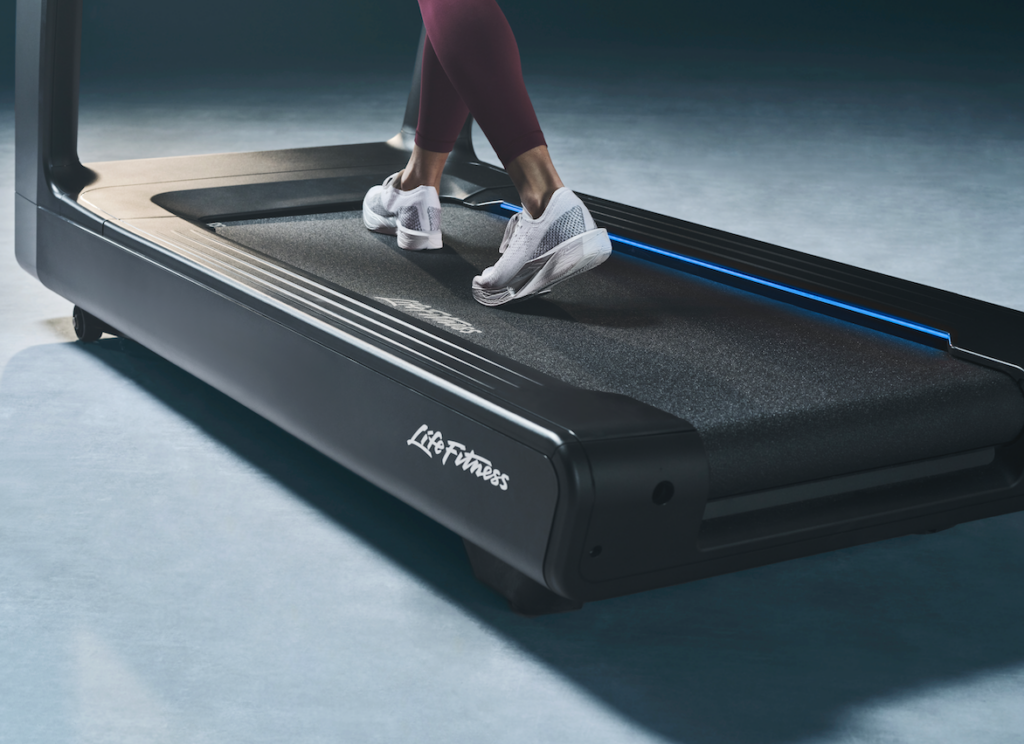
At Life Fitness, we’ve seen how these ideas come to life through our addition of 140+ more interactive terrains on our premium cardio consoles. These environments, inspired by hundreds of thousands of real user workouts, allow exercisers to explore locations like New York, Australia, and Andorra, and even change courses mid-workout without losing their rhythm. As the visual terrain changes, the Adaptive Flex Deck® on our Symbio Runner™ automatically adjusts beneath the user’s feet, providing a more realistic feel that mimics varying outdoor surfaces and enhances overall immersion.


Paired with our complimentary Life Fitness On Demand+, which offers a growing library of instructor-led workouts, the cardio floor becomes a content-rich space that supports different goals, schedules, and energy levels. Elevate your exercisers’ experience with effortless immersion, and bring premium content to life in a single click through Facility Connect; our state-of-the-art equipment management portal makes content updates as simple as 3, 2, 1.

With that said, these features only matter because they meet a bigger need. Exercisers want cardio that responds to them. That gives them options. That earns their time.

“Symbio is beyond anything else out there. From streaming services to interactive terrains, the technology is just fantastic, and our members love it. I run on it myself, and it’s been bulletproof. It’s become a huge selling point and absolutely helps during tours. The personalization, the interactive features, the way the terrain adapts under your feet, and even the way Life Fitness trained us on the tech—it all surprises people in the best way. It’s made a real impact on the member experience.” – Jason Taylor, Gold’s Gym SoCal

Looking Ahead: What Immersive Cardio Could Become

Immersive cardio is still growing. As technology continues to evolve, we’ll likely see even more personalization such as adaptive coaching cues based on fatigue and expanded integration with wearables and fitness apps.

For facility operators, the challenge will be to keep pace with these expectations while maintaining operational simplicity. The opportunity? To create cardio experiences that are not just effective but genuinely enjoyable.

Because when cardio feels immersive, exercisers are not only more likely to start, but more likely to stay.

Want to talk about how immersive cardio could look in your facility? Contact our team today to learn more about how our free Digital Solutions can make a serious impact on your cardio floor.

Source: https://www.lifefitness.com/en-us/customer-support/education-hub/blog/rise-of-immersive-cardio

Share

The Eleiko Knurling Guide

Grip is a critical factor in a bar, and knurling plays a big role. Barbell knurling isn’t just texture — it’s where you connect with the bar. We craft each knurl to deliver a grip you can trust, tailored to the demands of various lifts and lifters. Every pattern is precisely machined, ensuring the bar feels right from high-rep sessions to world record attempts. It’s part of what defines the Eleiko Feeling.


What is barbell knurling — and how is it made?

Knurling is the patterned texture on the shaft of a barbell. It’s what helps you hold on, creating friction between your hands and the bar so you can lift with control and confidence.

At Eleiko, we machine every bar using CNC lathes fitted with sharp steel tooling that presses into the shaft to form diamond-shaped peaks. The pattern, depth, and sharpness are carefully controlled to suit different types of lifting. Whether you need a mild grip for high-rep training or something sharper for a heavy single, we shape the steel accordingly.

Eleiko knurling is applied with extreme precision and consistency, made possible by our IT6 shaft straightness tolerances. The process is straightforward, but the outcome depends on four key factors. First, the number of revolutions the lathe makes before the cutting heads advance determines the spacing of the pattern. Second, the pressure applied by the tooling affects how pointed the knurl peaks become — more pressure means a sharper, more aggressive grip. Third, the sharpness of the tooling itself makes a difference. Fresh tools produce a crisper feel; worn tools create a softer texture. Finally, surface treatment plays a role. For the bars in our range finished with our DN3 Chrome™, the coating fills out the smallest valleys in the pattern. While it’s an incredibly thin layer and a fine detail, it is one you’ll feel in the hand. Knurling on bare steel will always feel slightly more pronounced.

Our two-layer DN3 Chrome™ finish is engineered to protect the bar while preserving the edge and feel of the knurl for years to come. Whether you’re gripping a new bar or your well-used favourite, the experience stays the same, year after year.


Why is barbell knurling important?

One of the most important aspects of lifting is the ability to achieve a strong, consistent, and secure grip. Knurling is more than texture; it’s a performance feature that affects how you lift and how safely you move weight.

A good grip is non-negotiable. The right knurling gives you the friction and control needed to hold heavy loads — especially in pulling lifts like deadlifts, rows, snatches and cleans. Without it, the bar slips. When grip slips, it is not only ineffective but also potentially dangerous.

Different lifts demand different grip levels. That’s why powerlifting bars have a more aggressive knurl, while weightlifting bars offer a sharp but more refined pattern. Matching the knurl to your discipline isn’t just a performance decision — it’s a safety one.

Knurling also guides hand placement. The feel of the knurl — and the grip markings — help position your hands correctly for each lift. In competition, those markings serve as a reference point and, in certain lifts, as markers for legal grip widths.

Finally, there’s comfort. Sharp enough to grip, but not so harsh that it tears your hands during a set. That balance is key — and a matter of personal preference. Some lifters keep multiple bars for different training styles. If you’re choosing one bar, aim for a knurling profile that suits your main type of lift.

Knurling calibrated to you

The key to great knurling is striking the right balance — sharp enough to grip, durable enough to last, and tuned to the demands of the lift. Two things shape how a knurl feels: the spacing between the diamond points and the depth of each cut. While there’s no universal standard for rating knurling intensity, our signature knurling patterns blend skilled craftsmanship with decades of athlete feedback to strike the ideal balance between grip and comfort for each lifting discipline.

We’ve defined four clear types across our bar range — each engineered for a specific lifting style:

  • 1.0 Standard: All-round volcano-shaped pattern for high-volume training.
  • 1.2 Training: Moderately sharp pyramid pattern for weightlifting training.
  • 1.2 Competition: Sharp pyramid pattern for competitive weightlifting.
  • 1.5 Power: Pronounced volcano pattern for maximum grip during powerlifting.


The 1.0 Standard knurling is our mildest — a volcano-shaped pattern designed for high-volume training. It gives a consistent feel across long sessions and is ideal for general strength work, CrossFit, and hybrid use. You’ll find it on the Performance, Hybrid, and Technique Bars, where comfort and versatility are key.

For Olympic weightlifting, we developed two pyramid-shaped knurls: the 1.2 Training and the sharper 1.2 Competition. The Training variant offers a slightly softer grip, perfect for repeated lifts during high-load training blocks. The Competition version is slightly sharper, providing a secure hold for record-setting snatches and cleans.

Powerlifting requires a distinct type of grip. That’s why our 1.5 Power knurling is the most aggressive in our range. With its deep volcano-cut texture, it offers maximum security during heavy squats, bench presses, and deadlifts. On our powerlifting competition bars, the 1.5 knurl is left uncoated to preserve its sharpness, as required by the IPF. On the WPPO Competition Bar, the 1.5 knurl is chromed, resulting in a slightly softer grip.

How to choose the right knurling and bar for you

Start with how you train. The type of lifting you do most often should guide your choice of bar. If you’re focused on Olympic lifts, go with a weightlifting bar. If your training is built around the squat, bench, and deadlift, choose a powerlifting bar. For a mix of movements or general strength work, a multipurpose bar is the better fit.

From there, think about volume versus intensity. Are you training often and cycling through higher reps? Or are you chasing max lifts and prepping for competition? That difference will help determine the level of knurling sharpness you want — and which Eleiko bar is right for you.


Center knurl or no center knurl?

Another factor to consider when choosing a bar is whether it includes a center knurl — the textured section placed in the middle of the shaft. Unlike the side knurling, which supports grip in your hands, the center knurl is designed to grip against your body or clothing during lifts.

So, do you need one? That depends on how you train. For powerlifting, a center knurl helps keep the bar in place during heavy back and front squats. In weightlifting, it can provide light grip during cleans — anchoring the bar to your shoulders without being overly abrasive. Because Olympic lifts are typically performed at lower volume, the center knurl won’t cause discomfort for most lifters.

But if your training includes high-rep sessions or CrossFit-style workouts, a center knurl can lead to scraping across the chest or collarbone. In those cases, a bar without a center knurl is often the more comfortable and versatile option.

Ultimately, the decision comes down to your main movements and how often you perform them. Choose the bar that supports your technique and volume.

Grip markings

Grip markings — also called knurl rings — are smooth, knurl-free bands on the shaft that guide hand placement. They help you line up consistently for every lift.

There are two standard markings: IPF grip marks, set 810 mm apart, are used for powerlifting. IWF grip marks, set 910 mm apart, are for Olympic weightlifting. Our multi-purpose bars, designed for general strength or hybrid training, include both, giving clear reference points for a wide range of movements.


For an improved lifting experience

The right bar makes all the difference, and knurling plays a key role. At Eleiko, we tailor each bar and knurling pattern to match the demands of the lift, whether it’s powerlifting, weightlifting, or hybrid training. The result is a bar that feels right in your hands and performs the way you need it to — every time you lift, year after year.

Source: https://eleiko.com/en/stories/how-bar-knurling-differs

Share

Try These 5 Forearm Exercises for Your Next Home Workout

Your forearms might be the missing link you need to unlock your upper body strength. These small (but important) muscles drive everything from daily tasks to heavy training days. The good news: You don’t need a gym to build serious lower arm strength. With some gym equipment, our TRX Suspension Trainer™, and a few functional moves, you can build grip power, wrist endurance, and rotational strength.

Let’s break down seven forearm exercises that punch well above their weight.

Why Forearm Strength Matters

Forearm strength is important because it enhances everyday grip strength and improves control during high-tension movements. We get more into it below.

Boost Everyday Grip Power

Strong forearms make everything easier: lifting, pulling, carrying, and even typing. Grip strength isn’t just a gym metric—it’s a real-world performance booster that’s essential for rock climbing and other sports. Research even links it to heart health, brain function, and longevity.

Prevent Injuries and Improve Control

Training your forearms helps protect your wrists and elbows by building durability through repetitive motion and load-bearing. Balanced forearm development means fewer tweaks and more control, especially during high-tension movements.


How Often Should You Train Your Forearms?

For optimal results, train your forearms 2-3 times per week with at least 48 hours of rest between sessions. This allows for proper recovery while providing enough stimulus for growth. Since forearms are used in many daily activities, they can handle more frequent training than larger muscle groups, but avoid overtraining by listening to your body.


Make Sure You Warm Up Your Forearms Beforehand!

Before diving into forearm exercises, spend 5-10 minutes warming up your wrists and forearms. Perform gentle wrist circles in both directions, flex and extend your wrists through their full range of motion, and do some light finger stretches. This preparation helps prevent injury and improves performance during your workout.

7 Forearm Exercises You Can Do From Home

1. Towel Grip Pull-Ups (or Dead Hangs)

Towel Grip Pull-Ups are excellent for developing crushing grip strength while targeting your forearms, upper back, and biceps. By gripping towels instead of a bar, you force your hands and forearms to work much harder to maintain control, making this a powerful grip-building exercise.

How to Do It:

  1. Drape two towels over a pull-up bar, leaving enough length to grip comfortably.

  2. Grab one towel in each hand with a firm grip, wrapping your fingers around the towel.

  3. Hang from the towels with your arms fully extended and shoulders engaged.

  4. If you can do pull-ups, pull yourself up until your chin clears the bar, focusing on maintaining a tight grip on the towels.

  5. Lower yourself back down with control, keeping constant tension in your grip.

Tip: Can’t do pull-ups yet? Start with dead hangs, holding for 15-30 seconds. No pull-up bar? Use towels over a sturdy door (close the door for safety) or tree branch.


2. Wrist Curls

Wrist Curls go beyond traditional dumbbell training by engaging more stabilizing muscles due to their movement patterns. This not only builds wrist and forearm strength but also enhances overall grip endurance, crucial for lifting, pulling, and daily functional strength.

How to Do It:

  1. Sit on a chair or bench with your forearms resting comfortably on your thighs, palms facing up.

  2. Hold a dumbbell (or YBell™) in each hand using the outer grip.

  3. Without moving your arms, curl your wrists upward, contracting your forearms.

  4. Slowly lower the YBells™ back down to the starting position.

  5. After completing the set, switch to a palms-down grip (reverse curls) and repeat the motion.

  6. Perform 2–3 sets of 12–15 reps in each direction (palms up and palms down).


3. Reverse Wrist Curls

Reverse Wrist Curls are a classic forearm exercise that targets the extensor muscles on the back of your forearms. This movement helps balance out the flexor strength you develop from gripping activities and is essential for preventing imbalances that can lead to injury.

How to Do It:

  1. Sit on a chair or bench with your forearms resting on your thighs, wrists extending just past your knees.

  2. Hold a dumbbell in each hand with your palms facing down (pronated grip).

  3. Allow your wrists to drop down as far as comfortable, stretching the top of your forearms.

  4. Slowly curl your wrists upward, lifting the dumbbells as high as possible using only your wrist movement.

  5. Hold the top position briefly, then slowly lower back to the starting position.

  6. Perform 2–3 sets of 12–15 reps.

Why it Works: Reverse wrist curls specifically target the forearm extensors, which are often weaker than the flexors. This exercise helps create balanced forearm development and reduces the risk of conditions like tennis elbow.

4. Fingertip Push-Ups

This bodyweight variation turns a standard push-up into a serious grip and finger strength challenge. By shifting your weight onto your fingertips, you build powerful hand muscles, strengthen the tendons, and improve stability through the wrists and forearms—all without any equipment.

How to Do It:

  1. Get into a standard push-up position with your body in a straight line and your weight supported on your fingertips.

  2. Engage your core and glutes to maintain alignment.

  3. Lower your chest toward the ground slowly over 3 seconds, keeping your fingertips pressed firmly into the floor.

  4. Push yourself back up over 2 seconds, maintaining fingertip control and tension.

  5. Too challenging? Start from your knees or place your hands on an elevated surface like a bench.

  6. Want to level up? Place your feet in the TRX foot cradles for added instability and an even greater core and grip demand.


5. TRX Suspension Trainer™ Row

TRX Rows are excellent for building pulling strength while significantly challenging your grip and forearms. The suspended nature of the exercise forces your hands to work harder to maintain control of the handles, making it a powerful compound movement for forearm development.

How to Do It:

  1. Anchor your TRX Suspension Trainer™ securely at chest height.

  2. Grab the handles with both hands and walk your feet forward until your body is at a 45-degree angle.

  3. Keep your body in a straight line from head to heels, engaging your core.

  4. Pull your chest toward the anchor point by squeezing your shoulder blades together and driving your elbows back.

  5. Focus on gripping the handles tightly throughout the entire movement.

  6. Slowly lower yourself back to the starting position with control.

  7. Perform 3 sets of 8-12 reps.

Why it Works: TRX Rows challenge your grip endurance while building upper body pulling strength. The unstable handles require constant grip engagement, making your forearms work harder than traditional rowing exercises.


6. Dumbbell Farmer’s Walk

The Farmer’s Walk is one of the most functional grip and forearm exercises you can do. This simple yet brutal exercise mimics real-world carrying tasks while building serious grip endurance and forearm strength using just dumbbells or kettlebells.

How to Do It:

  1. Stand tall holding a heavy dumbbell or kettlebell in each hand at your sides.

  2. Keep your shoulders back, core engaged, and maintain good posture throughout.

  3. Walk forward in a straight line for 30-60 seconds, focusing on not letting the weights sway or bang against your legs.

  4. If you run out of space, turn around and continue walking.

  5. When your grip starts to fail, that’s the end of your set.

  6. Rest for 60-90 seconds and repeat for 2-3 total sets.

Why it Works: Farmer’s walks train your grip under fatigue while also working your entire body. The longer you can hold onto the weights while walking, the stronger your forearms become.


7. Resistance Band Wrist Rotations

This exercise uses a resistance band to target the rotational strength of your forearms, which is often neglected but crucial for wrist health and functional movement. It’s perfect for building balanced forearm development and preventing overuse injuries.

How to Do It:

  1. Sit in a chair and anchor a resistance band under your foot or to a sturdy object at waist height.

  2. Hold the other end of the band with one hand, arm bent at 90 degrees, elbow tucked into your side.

  3. Start with your palm facing down, then slowly rotate your wrist to turn your palm upward against the band’s resistance.

  4. Hold for 2 seconds, then slowly return to the starting position.

  5. Complete 12-15 rotations in one direction, then reverse the movement for another 12-15 reps.

  6. Switch arms and repeat. Perform 2-3 sets on each arm.

Why it Works: Resistance band rotations strengthen the smaller stabilizing muscles in your forearms that control wrist rotation. This helps prevent injuries and improves overall wrist stability for sports and daily activities.


Make Sure to Avoid These Mistakes

Many people make the mistake of using too much weight too soon, leading to poor form and potential injury. Start light and focus on proper technique before increasing resistance. Another common error is neglecting the extensor muscles—make sure to balance flexor work with extension exercises. Finally, avoid training forearms immediately before exercises that require heavy gripping, as fatigued forearms can limit your performance in other lifts.

For those interested in comprehensive upper body development, explore our guide to bicep-focused exercises and learn about the differences between hammer curls and bicep curls.

Leave Enough Time to Recover and Stretch

Proper recovery is crucial for forearm development. After intense forearm training, perform gentle stretches to maintain flexibility and prevent stiffness. Try wrist flexor stretches by extending your arm and gently pulling your fingers back toward your body. For extensors, make a fist and gently push your hand down and back. Hold each stretch for 30 seconds and repeat 2-3 times.

Additionally, consider incorporating bodyweight arm exercises into your routine for a well-rounded approach to upper body training. This helps ensure balanced development across all muscle groups.

Combine These With Other At-Home Workouts

For those looking to build a comprehensive home fitness routine, consider exploring our complete collection of training guides. Start with our bicep workouts at home for upper arm development, then add strength training at home principles for overall muscle building.

Our shoulder workouts at home guide complements forearm training perfectly, while our ab workout at home ensures you maintain core stability during all your exercises.

Final Reps

You don’t need a rack of dumbbells to build game-changing grip strength. All you need is your body, some basic equipment like dumbbells or resistance bands, and a mindset that’s ready to work. With these seven effective moves, your grip won’t just get stronger—it’ll get smarter.

Source: https://www.trxtraining.com/blogs/news/forearm-exercises-at-home

Share