Key Benefits of Matwork vs. Reformer Pilates
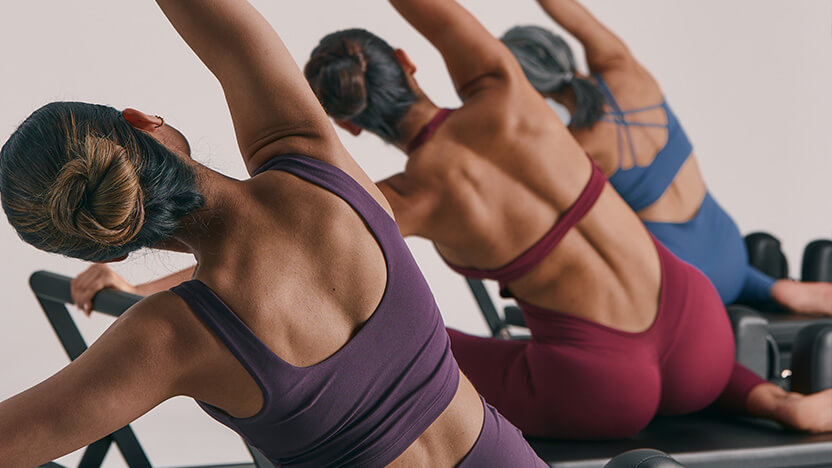
Matwork and Reformer Pilates are often compared as separate choices. In practice, they are complementary approaches that develop strength, awareness, and control in different ways.
How Strength Feels Different on the Mat & Reformer
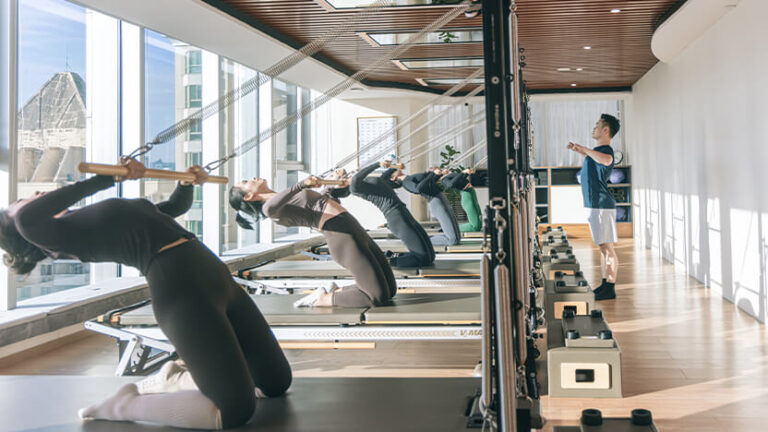
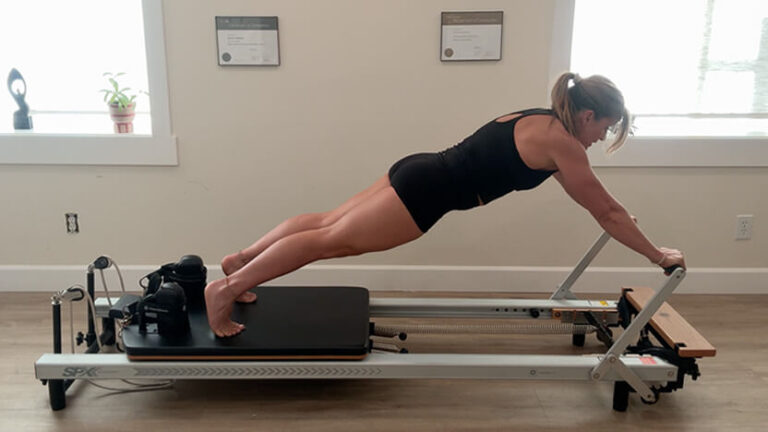
Strength feels different on the Mat and Reformer. The Reformer provides external support through its springs and moving carriage. While this creates resistance, it also offers feedback and, at times, an opportunity to rely on the machine.
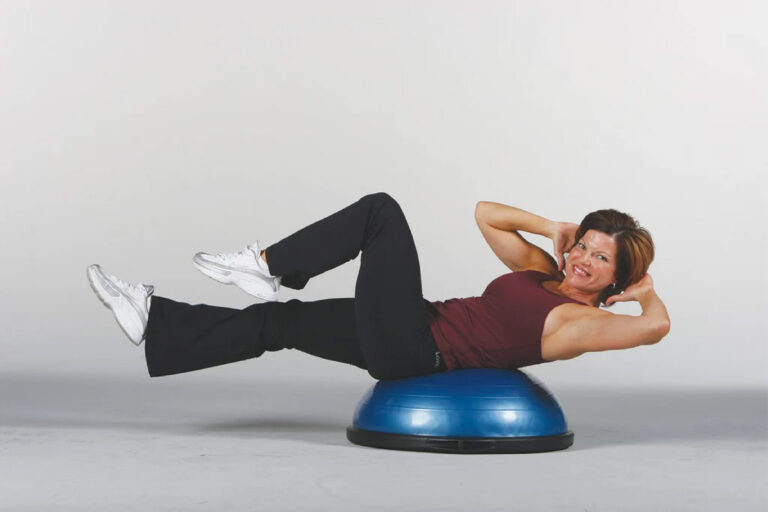
On the Mat, the body has fewer external supports and greater freedom of movement. Exercises are performed primarily against gravity, requiring the body to stabilize and organize itself without much assistance from equipment.
As STOTT PILATES® Master Instructor Trainer (IT), PJ O’Clair explains, “what often shows up isn’t necessarily a lack of strength, but a difference in awareness and control.” For many, this is why Matwork feels more challenging, as it reveals not just strength, but the quality of control behind it.

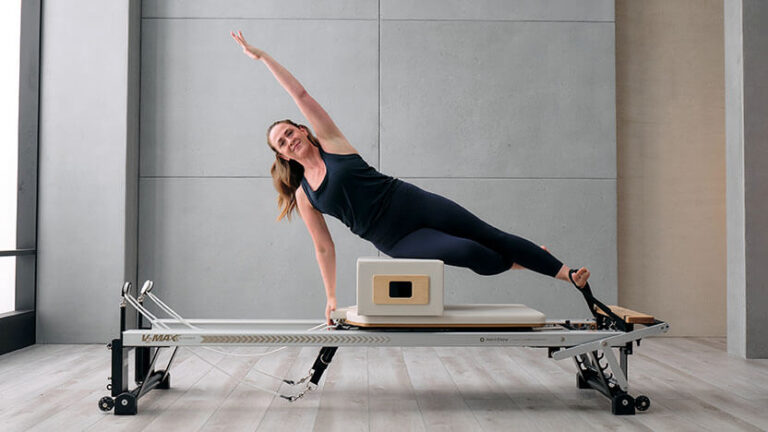
On the Reformer, springs can either assist movement or add resistance, depending on the exercise, spring setting, and programming intention. The carriage, straps, footbar, and springs provide external feedback that helps the body sense alignment, resistance, and movement patterns more clearly. At the same time, the moving carriage introduces an element of instability, requiring the body to respond with control, timing, coordination, and precision.
The Beginner’s Experience
When programmed appropriately, both Matwork and Reformer Pilates can be accessible and appropriately challenging for beginners. Strength, coordination, and body awareness develop progressively over time, making gradual progression essential
As PJ O’Clair explains, “The determining factor is not the modality, but the quality of instruction.” A skilled instructor creates an environment where clients can build confidence, refine movement patterns, and progress toward more complex challenges at an appropriate pace.
Enhancing Matwork with Small Props
Small accessories can add another layer of challenge and variety to Matwork:
- Toning Balls™ provide low-load resistance, making them ideal for developing muscular endurance. Their subtle instability and rolling capacity also encourage fluidity and support an improved range of motion.
- Flex-Band® creates a progressive challenge throughout the movement, particularly emphasizing eccentric control, the phase where strength is often most effectively developed.
Integrate these tools into movement to advance Pilates accessory training and sharpen strength, control, and mobility.

Takeaway
Mat and Reformer Pilates are not competing approaches. They are complementary tools within one cohesive system. Matwork develops strength, awareness, and control using bodyweight, gravity, and freedom of movement. The Reformer adds springs, a moving carriage, and external feedback, allowing exercises to be supported, resisted, or made more unstable depending on the goal.
Together, they offer a fuller Pilates experience. Many Reformer exercises can also be explored on the Mat using bodyweight or small props, making the two approaches highly connected rather than separate.
Choose Mat Pilates for an accessible practice you can do almost anywhere, and that fits easily into your routine.
Choose Reformer Pilates for guided support and adjustable resistance, adding variety and structure to your practice.
Choose both to experience the best of both worlds, blending bodyweight precision with controlled resistance for a well-rounded practice.
Source: https://www.merrithew.com/blog/post/2026-05-14/key-benefits-of-matwork-vs.-reformer-pilates?srsltid=AfmBOoqe4SkQMxxFgCav_Is_LQ0s_-FbMgZonHky3V6My1_AuC2KXW9r