Understanding the Basics of Rowing
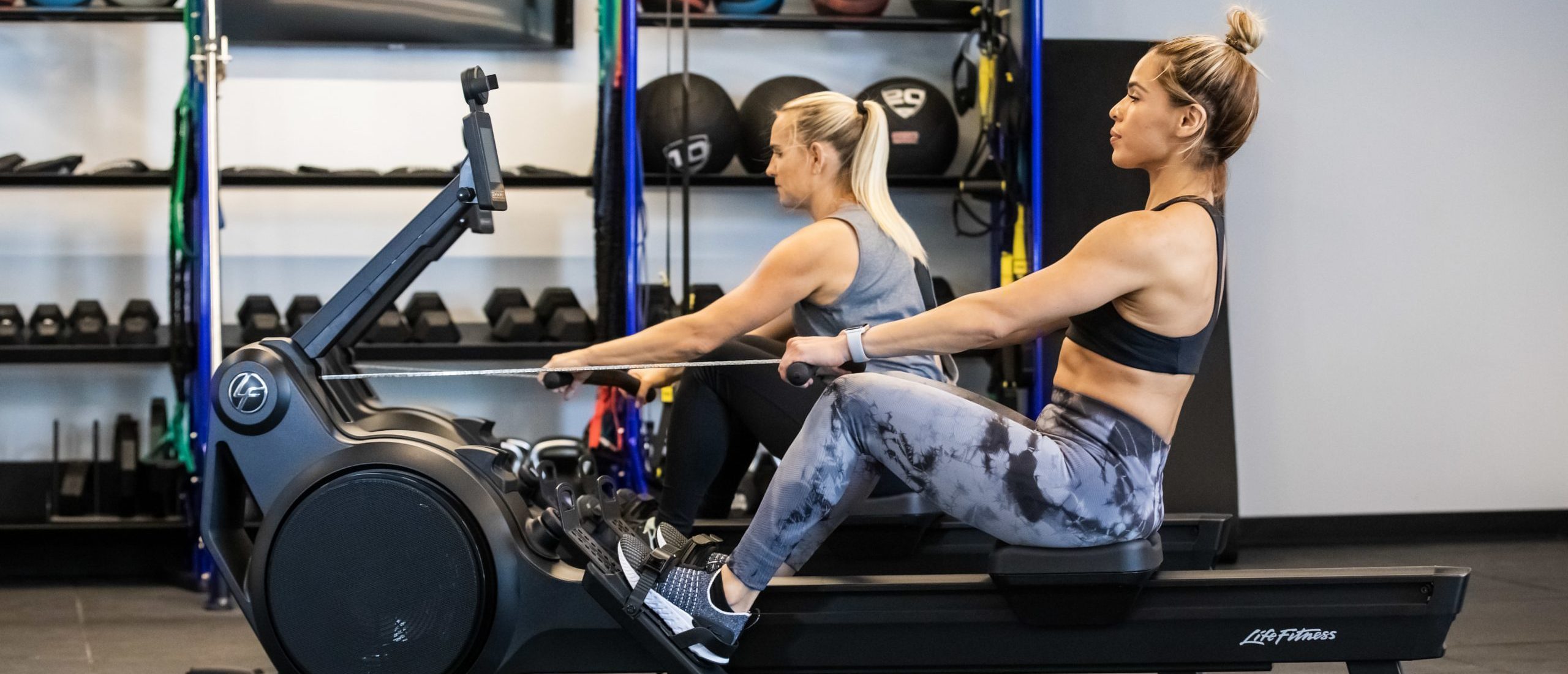
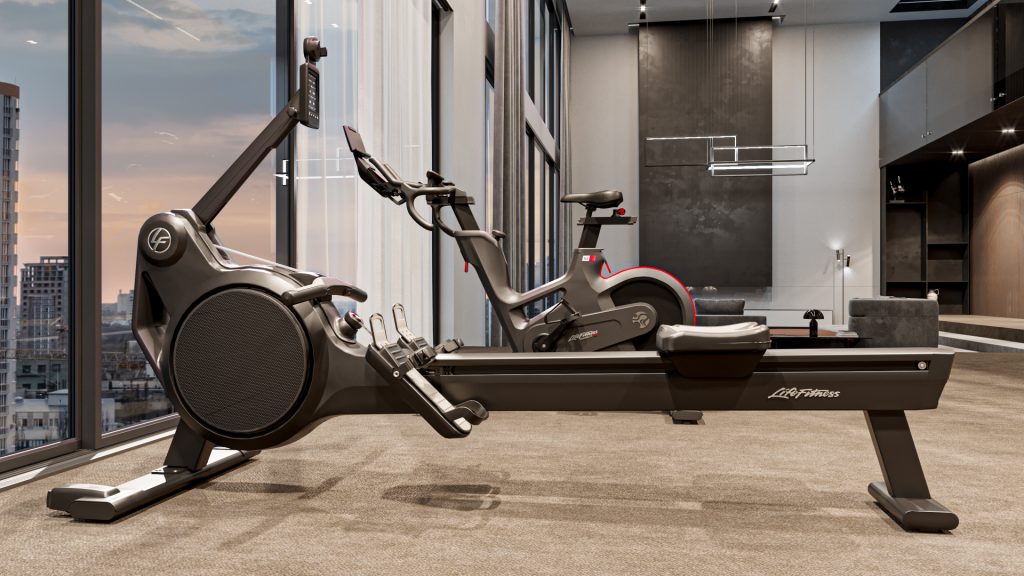
The use of rowing machines at health clubs has consistently increased over the last decade largely because they provide a great high-intensity, low-impact workout. It’s important to ensure that form and technique are correct to get the most out of the rowing experience.
THE FOUR STAGES OF ROWING
To start, it’s best to know the four distinctly different stages of the rowing stroke:
- Catch: The catch is the beginning of the stroke. Lean slightly forward while maintaining muscle engagement through the back for good posture. Extend the arms. Shins will be vertical. The seat will be 6 to 8 inches from the feet and the heels will be slightly lifted.
- Drive: The drive happens in two phases. First, extend at the knees to drive the seat back. Keep the arms extended and the back long. In the second part of the drive the legs come to full extension. Open the hips and lean back slightly. As you extend at the hip you feel the glutes engage. Keep the core activated throughout the movement to maintain good alignment.
- Finish: The stroke is completed by pulling the handle to the lower part of the ribs while still leaning back slightly. At the finish, the shoulders will be slightly behind the hips and you will feel the core working. The sequence of movement in the drive is legs drive first, then body hinges back, and finally the arms pull.
- Recovery: The recovery is just as important as the drive. The sequence of movement in the recovery is the reverse of the drive: arms first, then body, then the leg. The recovery should be slow while the drive is quick. And, you complete the sequence by returning to the catch.
IMAGINE YOU’RE IN A BOAT
Whether you are in an actual boat or on a rower, it helps to imagine the hydrodynamics involved in rowing. Power is delivered during the “catch” phase when the oar hits the water, and the body in the most compact position is ready to explode with controlled power. This portion of the movement is what actually moves the boat on the water. Maximum power is delivered in the first half of the movement while the second half controls the taper of power with the maintenance of technique.
Since rowing requires consistently reversing directional movement patterns, a taper of energy in either direction helps control the amount of energy required throughout the entire movement. Mastering the technique of rowing can help an individual maximize the efficiency of their energy expenditure regardless of their level of fitness.
THE CATCH PHASE
The power of the catch phase is distributed to the oar to move the boat on the water. The finish phase is at the end of the range of motion, after the power has already been delivered to the oar. The oar comes out of the water and the individual returns to reset their body into the ideal compact position necessary for the catch phase to deliver power again. At this point the torso is tall and the back is flat right before you push off. Ideally at the end of the range of motion, the powerful velocity created throughout the movement has been reduced to zero.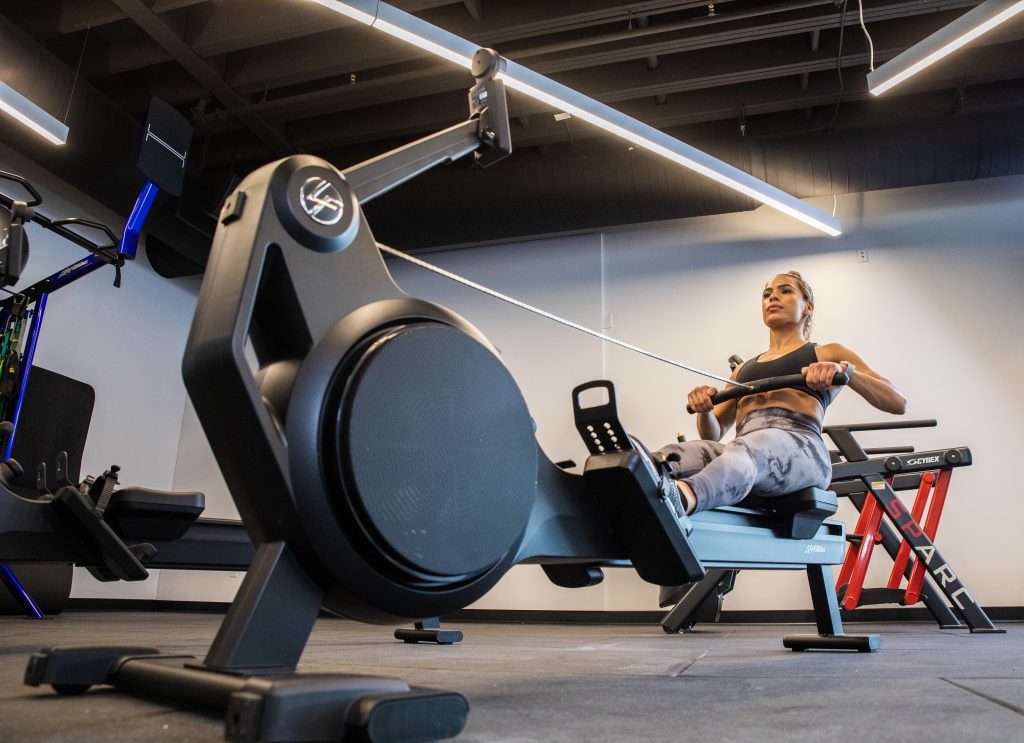
QUICK REMINDERS
Whether you are just starting out or you have been rowing for years, try not to forget these technical reminders while rowing.
- Catch and release. Control your timing, tempo and power production.
- The order of muscular recruitment is legs and hips, core, back, arms and then reset
- Breathing rate should change with intensity. Switch from one breath per stroke cycle to two breaths per cycle when things start to get intense.
- Start with slower strokes per minute (16 to 22) to master technique before moving on to faster strokes per minute (23 to 30).
- An appropriate warmup starts with moderate power and focuses on technique.
- Find your “race pace” for the distances of 2,000 meters, 5,000m and 10,000m. Practice maintaining the race pace power required for each distance.
- Utilise strokes/minute, watts, split time (and heart rate if possible) to control the intensity during your total time duration and distance traveled.
- Practice training slightly above and slightly below race pace for varying distances and durations.
Source: https://www.lifefitness.com/en-eu/customer-support/education-hub/blog/understanding-the-basics-of-rowing