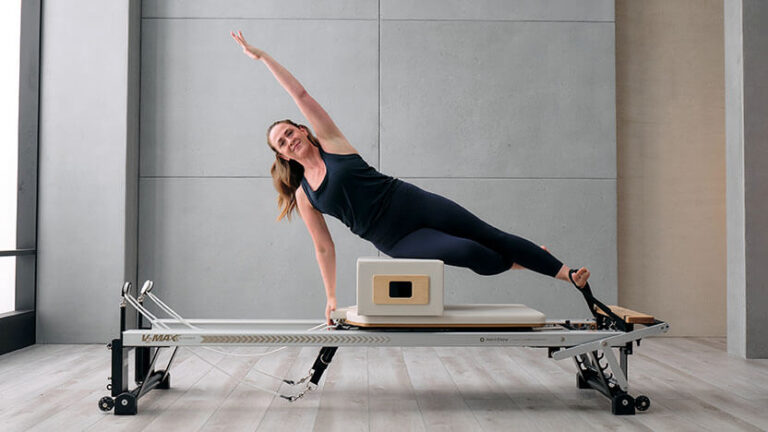
Exercise of the Month: Control Front on the Reformer
Ask someone to name a core-strengthening exercise, and chances are they’ll say “plank.” It’s the most commonly thought-of exercise for building abdominal strength and trunk stability. And yes, plank has its merits. It’s accessible, effective and widely understood. But is it the final word in core strength? Not quite.
Let’s break down why, and what makes the Control Front variation a whole different ballgame.
It’s worth highlighting that plank is the “trusty steed” of core training because it teaches basic alignment, bracing and endurance. But it’s an isometric hold. While that builds endurance, it doesn’t always reflect how our core works in real life. It’s about responding to shifts in load, balance and momentum. That’s what this Reformer exercise challenges you to do.
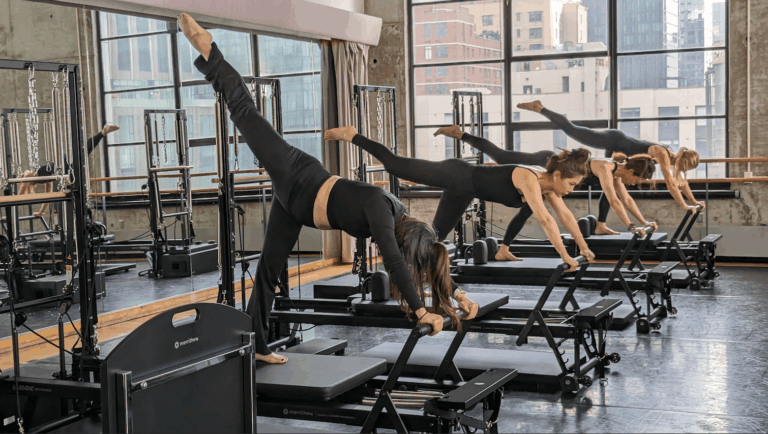
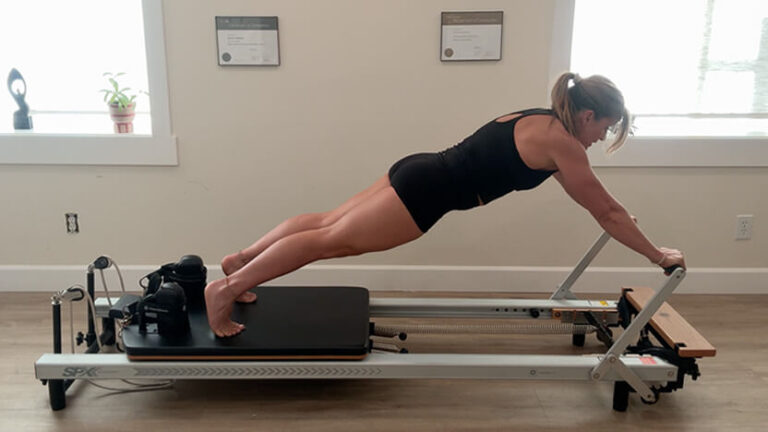
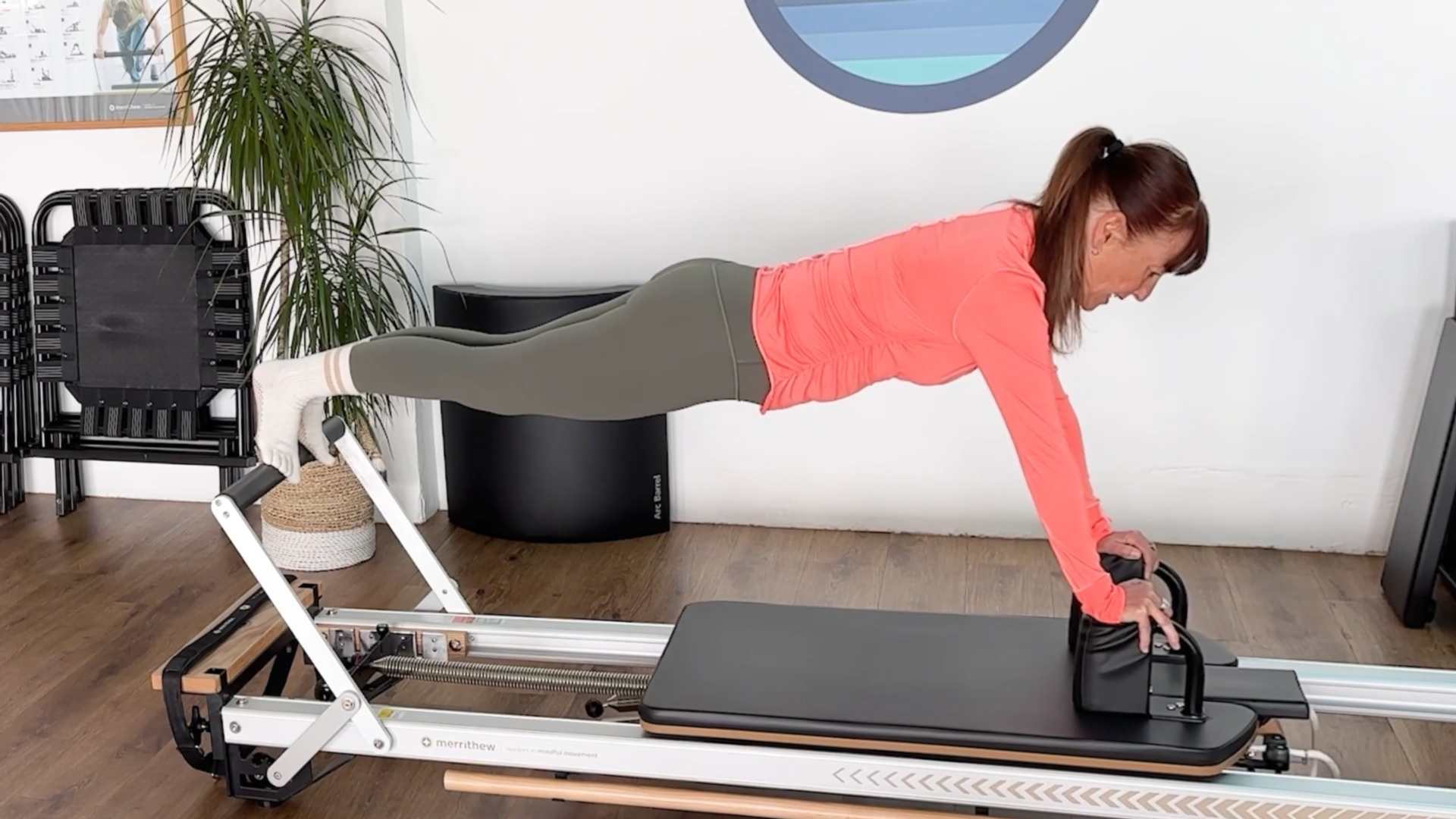
Boiled down, the Control Front is a plank on a moving surface. The carriage adds a layer of instability that requires full-body engagement so that you’re not just holding a shape, you’re constantly adjusting and recalibrating. It’s a test of dynamic control, and there’s no disguising bad habits as collapsed shoulders, disengaged glutes or passive legs. On the Reformer, the feedback is immediate. You drift too far forward or back: You feel it. Your control slips: The carriage moves. That kind of precision is what develops strength and total body integration.
Ready to take on the Control Front? Let’s turn talk into toes on the carriage.
Brigitte Wrenn, Merrithew® Lead Instructor Trainer and Co-Owner of Sea Breeze Pilates in St Leonards-on-Sea, and Bamboo Fitness in London, breaks down the Control Front with expert guidance so you can perform it with strength, safety and confidence. It’s a fun and challenging move that can take your practice up a notch!
To start, it’s recommended to use one to two 100% Reformer springs (the red ones), depending on your strength and experience level. With the footbar position #1 to support proper body alignment, Brigitte makes mention to ensure that the carriage stopper and gearbar are set for your height.
- Lighter Tension: Engages torso stabilizers (abdominals) and shoulder extensors (posterior deltoid, latissimus dorsi and teres major) by increasing instability and requiring greater control during the return phase.
- Heavier Tension: Provides more support and resistance but increases the load on the shoulder flexors (anterior deltoid, pec major and long head of biceps) during the push phase and building upper body strength.
Key Benefits
- Strengthens the Upper Body: Targeting especially the anterior deltoids in the front of shoulders, and the latissimus dorsi of the upper back.
- Enhances Shoulder Stability: Improved strength and control of the shoulder joints can help prevent injury especially in high-impact or repetitive motion activities, while also improving performance and reducing fatigue in activities like swimming, tennis or weightlifting.
- Builds Core Strength and Control: Engaging the abdominals, hip extensors to improve trunk stability, which supports dynamic movement and better posture.
- Encourages Total Body Integration: Promoting coordinated muscle engagement across the entire body, fostering a deeper sense of body awareness.
Brigitte’s Pro Tips
- Form Comes First: Don’t chase range at the expense of control. Keep each movement deliberate and steady. Precision is where the real strength builds.
- Think Long Line: Maintain the straight line from the crown of your head to your heels, this helps prevent the common pitfalls of sinking hips or a dropped chest and keeps the work exactly where you want it.
Build Up to Control Front
Not quite ready for the full expression of Control Front? Start by building confidence and control with a few targeted exercises and modifications.
- Plank on the Mat: Helps develop essential shoulder and core strength.
- Long Stretch: From the Intermediate Reformer repertoire introduces Reformer balance and load in a supported way.
- Modified Reformer Plank: To create a more stable setup, you can take one of two approaches. You might choose to place your feet on the platform extender or footbar, which helps ground the lower body. Alternatively, you can place your hands on the carriage—or on the sides of the carriage if you have broader shoulders—to reduce instability and the challenge of balance. If you go with the hands-down option, be sure to lower the footbar by one increment to keep a straight line through the body. These adjustments allow you to focus on proper alignment and develop control, offering a supportive starting point before progressing to the full version.
Author: Holly Eady
Source: https://www.merrithew.com/blog/post/2025-04-22/exercise-of-the-month-control-front-on-the-reformer