Difference Between Commercial Treadmill and Elliptical
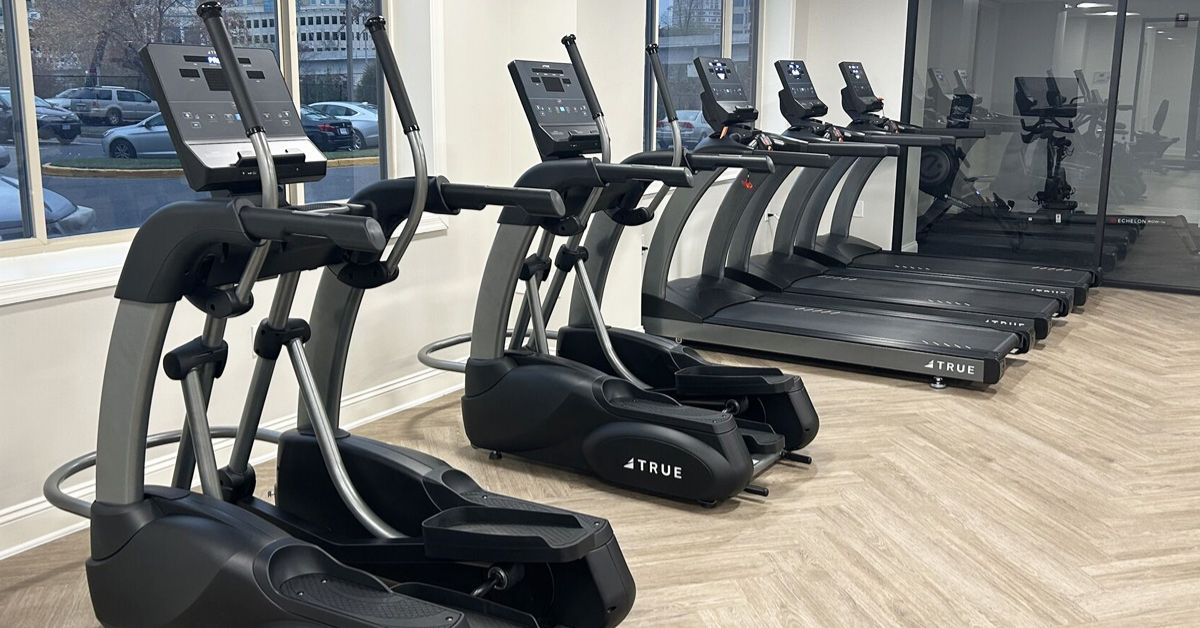
Are you looking to expand your fitness equipment collection in your commercial gym? Expanding the offerings can attract new members and entice current ones. If you’re considering adding a new cardio machine, you should first understand the differences between a commercial treadmill and an elliptical. Both of these machines provide great cardiovascular workouts, but they do have separate qualities and benefits. For those debating between the two, read about the features that set the machines apart.
Treadmill

A treadmill is a classic piece of cardio equipment found in most gyms. The machine uses a moving belt that allows users to walk, jog, or run in place. Some treadmills also have the option for incline settings to simulate moving uphill.
At TRUE Fitness, we offer premium, high-performance commercial treadmills. Our treadmills have deck cushioning to ease joint impact, incline adjustments based on heart rate, and customizable features accessible via sleek touchscreen options. Plus, our machines require very little maintenance, so you can keep them up and running to continuously appease gym members.
Benefits of a Treadmill
If your members are mainly looking to improve their running or jogging abilities, a commercial treadmill may be the best option for your gym. Treadmills provide an excellent workout for those looking to burn calories and improve cardiovascular endurance.
- Running on a treadmill burns more calories per hour compared to an elliptical.
- The incline feature on a treadmill makes it great for hill training to strengthen the body’s leg muscles.
- Running on a treadmill simulates natural body movement, making it easy for beginners to use.
- Treadmills are more budget-friendly compared to ellipticals.
- The moving belt allows users to vary their workout intensity and speed easily.
Cons of a Treadmill
- The high-impact nature of running on a treadmill can be difficult for people with sensitive joints.
- Users may feel bored from constantly moving in the same place.
- Treadmills take up more space compared to ellipticals.
Elliptical
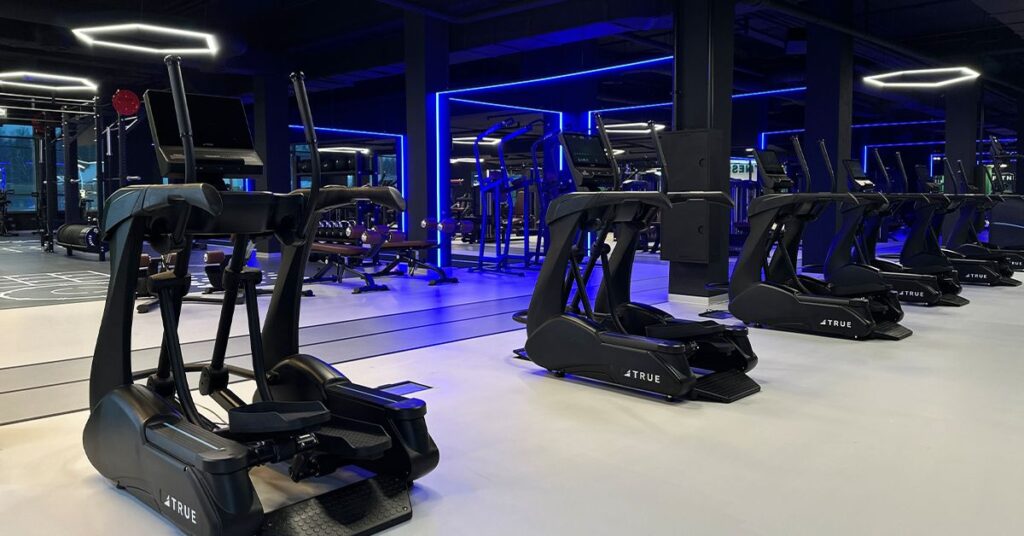
An elliptical is a stationary cardio machine that simulates running, walking, or climbing. The movement is smooth and low impact, making it gentler on the body’s joints than running on a treadmill. An elliptical has two foot pedals and may include handles for upper-body movement. Many commercial ellipticals come with adjustable resistance levels and preset workout programs to personalize the user’s workout regimen.
TRUE Fitness’s commercial elliptical equipment has a compact, space-saving design, so you can fit it in any facility, no matter its size. It features an adjustable stride length, allowing users of all heights to use the machine comfortably.
Select elliptical equipment also features Cardio 360™ technology. This feature allows users to follow a personal trainer on-screen while performing various exercises, including hill climbing and sprinting. It makes workouts more engaging and challenging for members.
Benefits of an Elliptical
- The low-impact movement on an elliptical is ideal for those with joint pain or healing from an injury.
- Ellipticals have a lower learning curve than treadmills, making them easier for beginners.
- Cardio 360™ technology offers a fun, interactive workout experience.
- Ellipticals target multiple muscle groups, including the arms, legs, and core.
- Users can easily adjust the elliptical’s resistance level to increase the intensity of their workout.
Cons of an Elliptical
- Users may burn fewer calories per hour on an elliptical than on a treadmill.
- The lack of impact may provide bone-building benefits different from running on a treadmill.
- Some users may find the movement on an elliptical awkward or unnatural.
- Ellipticals typically have a higher price point compared to treadmills.
If you have gym members with joint issues or looking for a low-impact workout, a commercial elliptical may be a better choice to upgrade your gym instead of a treadmill. An elliptical provides a full-body workout and can be a great option for improving cardiovascular health without stressing joints.
The Differences Between Treadmills and Ellipticals
Both the treadmill and elliptical provide effective cardiovascular workouts. You’ll have members who prefer one over the other; some members might use both machines as a part of their fitness routine. Nevertheless, here are a few key differences to keep in mind when deciding which machine to add to your commercial facility:
Impact
Treadmills provide a high-impact workout due to the constant pounding on the belt, and ellipticals offer low-impact exercise. This difference makes the elliptical a better choice for those with joint pain.
Muscles Targeted
Treadmills primarily work the lower body. Ellipticals can engage the upper and lower body muscles.
Calorie Burn
Both machines provide great calorie-burning workouts. However, treadmills tend to burn more calories per hour due to the higher running intensity.
Intensity
Due to their impact and the option for incline settings, treadmills offer a high-intensity workout. Ellipticals can also provide a challenging workout but may not be as intense as running on a treadmill.
Cost
While both machines vary in price, treadmills tend to be more budget-friendly compared to ellipticals.
Variability
Both machines offer various workout options, but treadmills provide more variety, including incline settings and the option to run at different speeds.
Space
Ellipticals take up less space than treadmills. Therefore, ellipticals are a better choice for small facilities.
If you’re able to afford and accommodate both machines in your gym, consider doing so to provide a well-rounded cardio experience for your members. This way, members can switch up their routines and challenge their bodies in different ways.
However, if you have limited space or a strict budget, consider your members’ demands. Which machine would benefit them the most? Do you have many runners or people who want to improve their running abilities? Do most of your members suffer from joint pain or injuries that would benefit from low-impact exercise? Evaluating your members’ needs will help you make the right decision.
Source: https://truefitness.com/difference-between-commercial-treadmill-and-elliptical/