Ask The Expert: Is Matwork Just for Beginners?
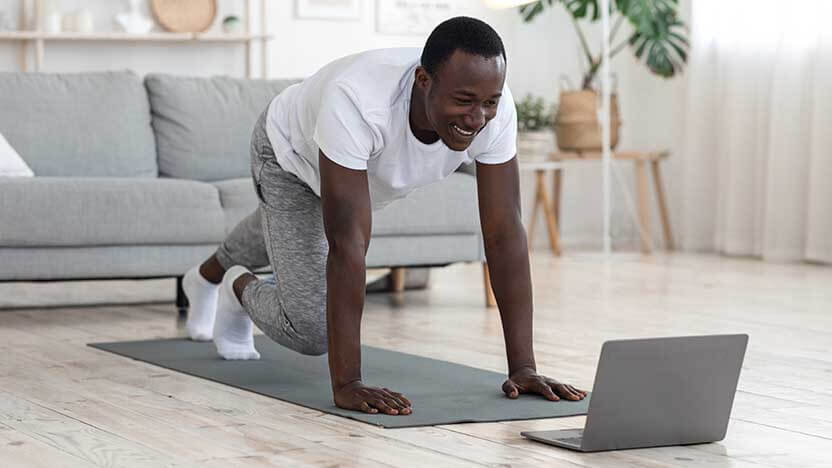
It’s easy to think of Pilates Matwork as merely the starting point of a program. After all, there’s no fancy equipment, no springs, no straps. However, exercises performed on the mat allow you to focus on areas that are often overlooked: quality of movement, optimal sequencing and activating the whole body.
For Merrithew™ instructors, the STOTT PILATES® Certification path does encourage starting with the Matwork repertoire so that a deeper understanding of the material is developed. This may lead to the misconception that a client would start with Matwork, then progress to the equipment exercises.
However, this is not necessarily the case. There are a couple of things to consider when looking at Matwork and how it is used for clients of all levels and ability.
1. Gravity as Resistance
The main source of resistance in all Matwork exercises done without props is gravity. Learning how to work with gravity to produce the desired muscular activation is one of the main goals of a trained instructor.
Since gravitational force is always in one direction – down – changing the starting position of an exercise will alter the target muscles. Using only bodyweight requires greater focus and helps build muscle strength and endurance, and makes the tendency to “cheat” a little easier to avoid. Bodyweight training has long been regarded as a highly effective means of increasing fitness levels in any individual.
2. Progressive Exercise
It is true that many workout warm-ups are done on the mat, but the intensity and challenge of the workout can be as individual as the person performing it. At any level, movement quality is paramount. Not only are the specific exercises being performed important, but how they are performed may be even more crucial. Because of this, exercises that seem simple can become extremely challenging when done properly.
The STOTT PILATES repertoire begins at the Essential Level, where simple movement patterns are introduced. Once competency is developed, progressions through the Intermediate and Advanced levels are layered. While this may be the goal of a particular exerciser, it is not a quick journey, sometimes taking years of dedicated practice to achieve.
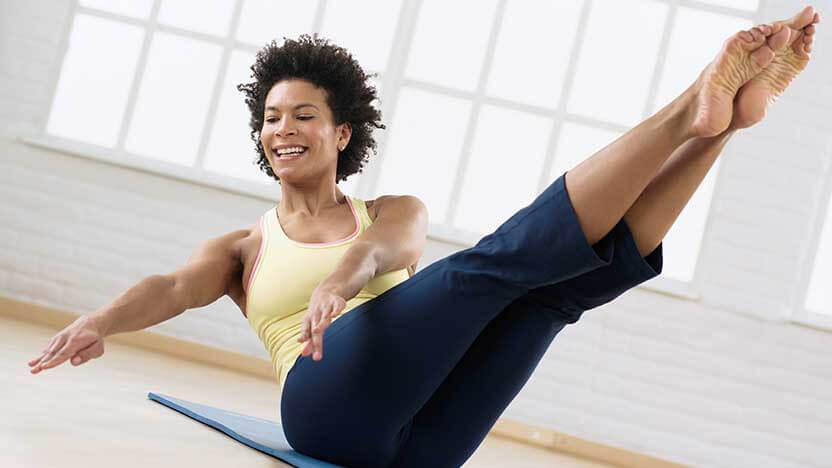
Often, the same exercise will have versions at the Essential, Intermediate and Advanced levels, each building in intensity and physical demands. For example, the Teaser, a classic Pilates exercise, begins with a preparation at the Essential level that focuses on developing abdominal strength, movement sequencing and spinal mobility. This is done first in a closed-chain (in this case, with the feet on the mat), then in open-chain (the feet are lifted to a tabletop position) environment.
At the Intermediate level, the movement is done at a slightly quicker pace with the addition of a longer lever to challenge muscular endurance in the hip flexors (the legs are extended out on a diagonal).
Finally, the Advanced version has the movement starting from a lengthened supine position on the mat where the strength of the anterior muscles (on the front of the body) are challenged even further. Subsequent Advanced variations challenge torso stability in an inclined position while adding long-lever eccentric control, balance and coordination.
3. Elements of the Essences
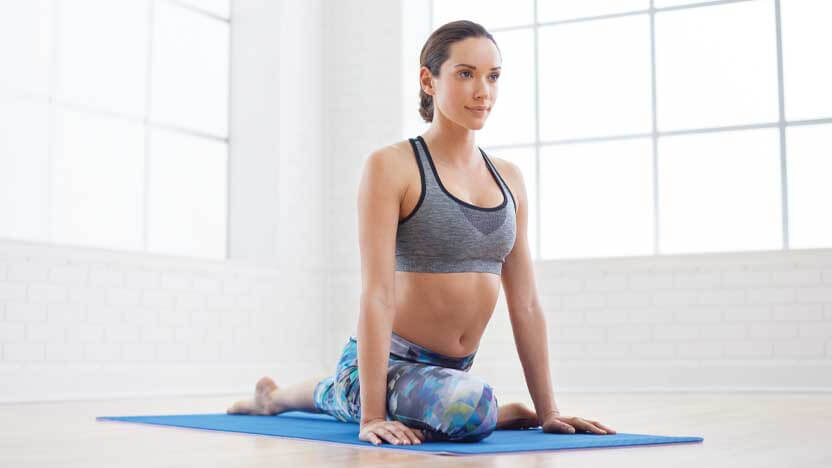
Each exercise in the full Mat repertoire has a particular focus, or Essence, that may include strength, stability, mobility, balance, coordination, muscular endurance and flexibility — individually or in combination. Starting with the Essential exercises, each area is developed and movement competency must be achieved in the majority of these areas before additional challenges are programmed.
Most people will be more proficient in one area over another. For example, one may possess a good deal of strength, but be lacking in flexibility or balance. The goal of a well-designed Matwork program is to create a good balance in all facets.
Movement patterns are also performed in a variety of directions or planes that include forward, back, sideways and rotational sequences. Once again, a client may be very strong in one direction, may be lacking in another. For example, a runner or cyclist who performs a repetitive sagittal plane activity (forward/back motion), may be lacking in frontal plane (side to side) ability. It is important for the instructor to be able to recognize where deficiencies are, and choose exercises appropriately.
4. Giving Props
The exercises in the Matwork repertoire also support the use of props to target elements needing more focus. Resistance props like the Flex-Band and Fitness Circle require greater muscular strength and can be used to incorporate full-body movements. This could mean adding arm work to an exercise that is traditionally core-focused.
They can also give the added bonus of working the legs when the simple movement might not include them. A Mini Stability Ball or Stability Barrel require greater balance and control when used in specific applications. Additionally, Soft Handweights, Resistance Tubing, Stability Balls, Sliding Mobility Disks and even a Twist Ball have the ability increase the intensity in any workout, providing greater demands for the entire neuromuscular and myofascial systems.
With all this in mind, it is easy to see how Matwork alone can be perfect for those starting out, but can also challenge even the most fit individuals.
Source: https://www.merrithew.com/blog/post/2022-03-15/ask-the-expert-is-matwork-just-for-beginners