Top quality design features to consider when choosing your cardio console
Buying cardio equipment is a lot like buying a car.
It’s a major purchase most people make only once every several years. The market changes a lot between buys. And with sales of home fitness equipment up by triple-digit percentages since the onset of COVID 19, there are more new or first-time shoppers than ever.
Perhaps you’re one. If so, we’re here to help you make sense of the marketplace. Because just as today’s cars have more technology baked into them than ever before, treadmill consoles nowadays are capable of things that were unheard of even five years ago. To get the most for your money, your buying process should involve three steps:
- Understand the options available
- Determine which options you need
- Find the right fit for your budget
This guide walks you through Step #1. In the sections that follow, we’ll dive deep into treadmill consoles. We’ll explain how console display layout can affect your comfort and safety on the machine. And we’ll explore new connectivity options and what they can do for you.
By the end, you’ll be ready to find the right match for you.
How to Tell at a Glance if a Console is Good
Why focus so much on the console? While the “ride” underfoot certainly matters, the surface of any fitness equipment you consider should be durable, provide excellent shock absorption, and feel good. That’s table stakes.
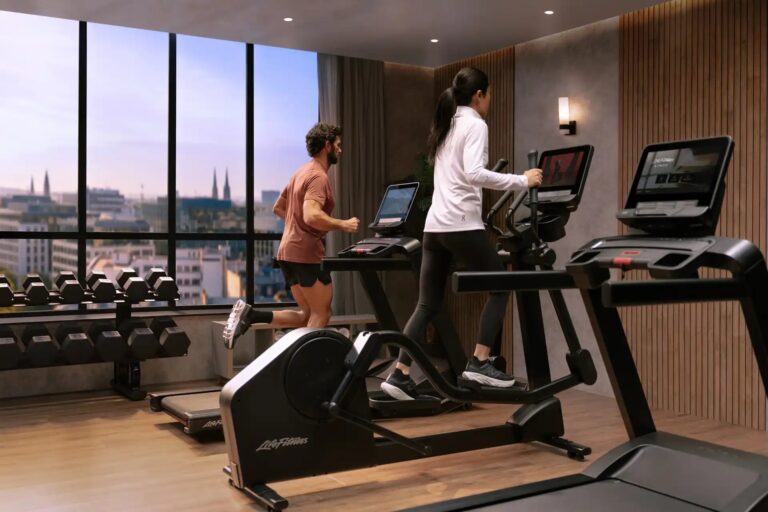
The console, meanwhile, is where all of your thinking interaction with the machine takes place. It’s what greets you every time you step onto a cardio machine, be it a treadmill, bike, elliptical or arc trainer. And consoles vary greatly from manufacturer to manufacturer.
A good console gets you into your workout quickly, connects to your devices without hassle, and — if you ever get bored — is capable of presenting you with new training options.
To meet its many requirements, a console control board ought to have a clear visual hierarchy, where:
- Most-used buttons are the largest. Fun fact: That means “go”, “stop” and “cool down” need to be unmissable and located toward the center.
- The second most-used items on the control board are speed and incline. These also should be large and centrally located. One-touch options for preset speeds are also nice.
- Entertainment features like device connectivity or TV controls should be on the periphery.
- Additional workout programs need to be available — and recognisable. Time-tested training protocols like intervals or hills remain in high demand.
- The console display ought to be big enough where you can clearly understand messages on its LED or LCD display.
Finally, don’t forget about the reading rack, which nowadays doubles as a smartphone holder more often than not.

Are You Not Entertained?
Now that we’ve discussed “what” must be on a console control board, let’s examine your options for “how” that information can be presented.
Broadly speaking, you have three categories of options. In order of increasing entertainment value, they are:
-
LED Consoles — The classic, basic workhorse. On LEDs, you push buttons to control the device and read data written in LED lights. Good for people who want to just hammer out miles or meters and who don’t need a lot of frills.
-
LED/LCD Hybrids — These units have some push-buttons and LED info positioned around an embedded video screen. Good for people who want their viewing experience on the console but who may not need the full-on touchscreen experience.
-
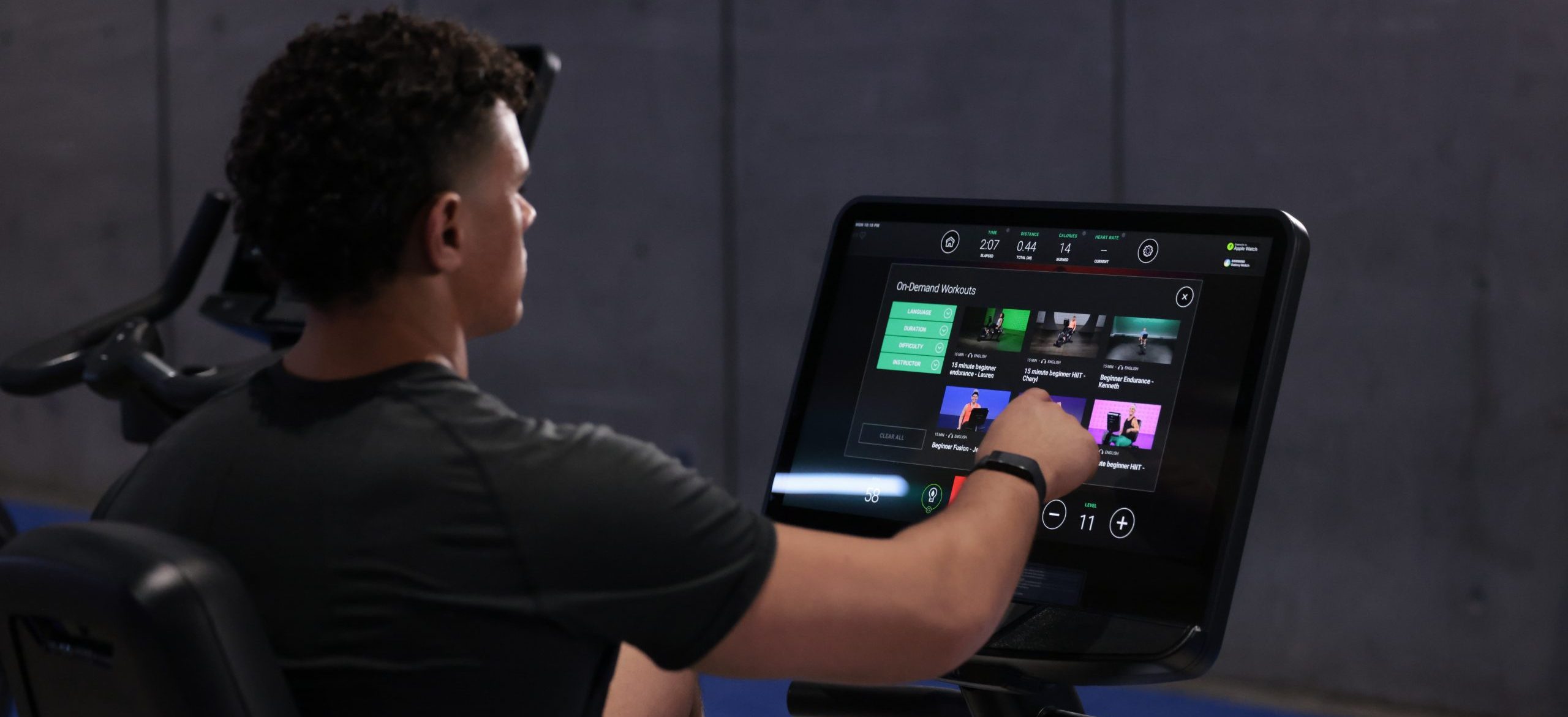
Tablet-style Touchscreen LCDs — Basically a high-end iPad mounted on cardio equipment. These displays have the most flexibility and premium features like streaming workouts;
Another key thing to consider: Accessibility. The larger the display area is on a unit, the bigger its messages can be presented. Bigger sizes let the unit say more (helpful for maintenance situations or software updates) and or use larger font sizes.

Get Yourself Connected: Today’s Must-Have Fitness Technology
More exercisers are using more devices in more ways than ever before. In fact, sales of bluetooth headsets grew by 200% during 2019, with Apple AirPods alone selling 60 million units within that category.
About 14 million more people purchased a smartwatch during the first quarter of 2020. And remember, those numbers are pre-COVID. It’s easy to see why “wearable devices” is the #1 trend influencing fitness for four of the past six years, according to the American College of Sports Medicine.
So where 20 years ago people might roll up on a treadmill with a heart rate monitor if anything, today’s trainees come equipped with a smartwatch and a killer set of headphones — and all of them are wireless.
To meet the needs of those many devices (and different brands of device makers), a console needs to offer an alphabet soup of connectivity, including:
- ANT+ lets wireless devices “talk” and relay data to each other. Started with the popular Garmin series of watches/devices, and has expanded over time.
- Apple® GymKit works seamlessly with Apple Watches to share data between watch and device. The watch tracks calories and handles heart rate monitoring while the treadmill records metrics like pace and distance.
- Bluetooth® (or BLE) works on anything from heart rate straps to BEATS-style headphones.
- NFC is a short-range sensor technology most known for it’s use in “tap to pay” credit cards. On a treadmill, it makes syncing with your iPhone or Android super easy.
- Wifi — yes, like in your laptop — is a helpful way to transmit larger amounts of data to your cardio equipment. Useful for tracking treadmill use, maintenance needs, and offering premium content like streaming workouts.

Source: https://www.lifefitness.com/en-eu/customer-support/education-hub/blog/top-quality-design-features-to-consider-when-choosing-your-cardio-console